
 電話で予約
 WEB予約
 LINEで予約


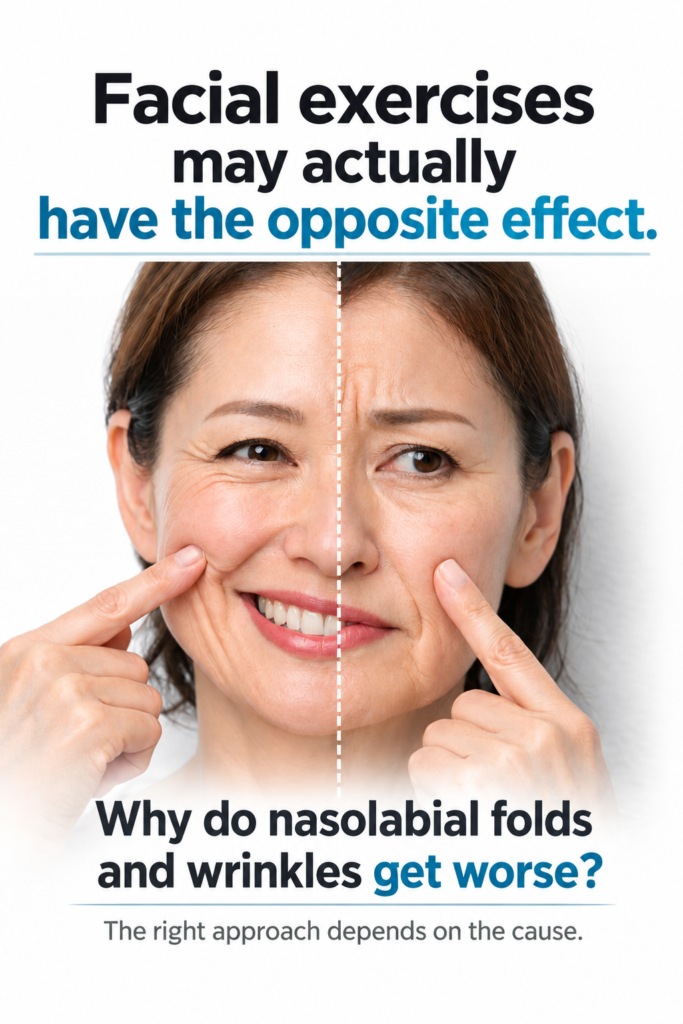
NASOLABIAL FOLDS & FACIAL EXERCISE
To reduce nasolabial folds,
are you overworking your facial muscles?
I do not believe that facial exercises or facial muscle training are inherently bad. However, when I see patients repeatedly making forceful movements with their cheeks and mouth in an attempt to soften their nasolabial folds, I sometimes wonder whether those movements may contribute to the development of persistent skin creases. Nasolabial folds are not caused by weak muscles alone. The first step is to understand what makes your own nasolabial folds noticeable.

What I Want You to Know First
Many people wonder, “If I train my facial muscles like the muscles in my body, could I lift my cheeks and make my nasolabial folds less noticeable?”
However, I do not recommend vigorous, repetitive, self-directed exercises of the mouth and cheeks to improve nasolabial folds for every patient.
More facial exercise does not necessarily mean better results.
Nasolabial folds have multiple contributing factors, not just the facial muscles. These include loss of collagen in the skin, cheek fat, sagging, facial bone structure, hollows beside the nose, and repeated folding of the skin when smiling.
- Moving your face is not inherently harmful.
- But there is no need to repeatedly perform exaggerated or forceful movements.
- Take particular care if creases linger after you smile.
- If your nasolabial folds are visible even at rest, consider causes other than muscle weakness.
During an examination, I do not simply ask whether a patient’s facial muscles are weak. I look at whether the folds appear only when smiling, whether creases persist afterward or remain clearly visible at rest, whether there are structural hollows beside the nose, and whether the cheeks are particularly full or have a higher volume of fat.
If the underlying cause is different, simply continuing the same facial exercises may not produce the changes you are hoping for.
Can Facial Exercises Actually Improve Nasolabial Folds?
We cannot say that facial exercises are completely ineffective. Some small studies have reported changes, such as increased cheek fullness, among people who continued facial exercises.
However, the available medical research is not yet sufficient to conclude that facial exercises reliably improve nasolabial folds, wrinkles, or facial sagging.
My position is not that you should avoid moving your face. Rather, I do not think repeated, forceful facial exercises are necessary for the purpose of eliminating nasolabial folds.
There is no need to avoid natural smiles or gentle mouth movements, even if you do not use your facial muscles very often. However, exercises such as opening the mouth widely 100 times a day, lifting the cheeks forcefully, or repeatedly making expressions that create deep folds in the skin deserve a different level of caution.
Because research on facial exercises remains limited, there is currently no specific exercise that can be said to reliably improve nasolabial folds for everyone.
Medical references: 2024 Systematic Review / Review of Facial Exercises for Facial Rejuvenation / Controlled Study of Facial Exercises
Why Facial Exercises May Make Wrinkles More Noticeable

There is an important difference between the muscles of the body and the muscles of facial expression.
Skeletal muscles in the body generally attach to bones through tendons and move joints when they contract. Many facial expression muscles, by contrast, originate from bone or fascia and attach to the skin. As a result, the skin moves along with these muscles when they contract.
That is why smiling, frowning, or pursing your lips creates folds in the skin.
When the skin is youthful and sufficiently elastic, it generally returns to its original position when the expression relaxes. However, as skin elasticity declines due to aging, ultraviolet exposure, and dryness, repeated folding in the same areas may gradually develop into creases that remain visible even when the face is at rest.
Horizontal forehead lines, frown lines between the eyebrows, and crow’s feet are familiar examples.
In fact, for expression lines caused by muscle contraction, treatments such as Botox are used to reduce muscle movement.
Nasolabial folds are more complex than forehead or frown lines, but repeated folding of the skin in the same location when smiling can also contribute to persistent creases.
Nasolabial Folds Are Not Simply Caused by Weak Facial Muscles
This is an especially important point.
In my consultations, the causes of nasolabial folds vary considerably between patients. Even folds that look similar cannot necessarily be resolved just by strengthening the facial muscles.
As collagen and elastin decrease, creases formed when smiling may become less likely to smooth out afterward.
When the skin folds repeatedly in the same area while smiling, a crease may gradually remain even at rest.
A pronounced structural hollow near the base of the nose can create a deep-looking shadow along the nasolabial fold, independently of muscle strength.
Fuller cheeks or a greater amount of cheek fat may create a height difference between the cheeks and the mouth, making nasolabial folds more visible.
As cheek fat and soft tissues descend, they may overlap the area above the nasolabial fold, creating a deeper contour and more pronounced shadow.
When nasolabial folds are noticeable from a young age, the natural shape of the facial bones and the fullness of the cheeks may contribute, rather than aging alone.
For more information, read What Causes Nasolabial Folds.
Signs You May Want to Reconsider Your Facial Exercise Routine
I do not tell patients to stop facial exercises immediately simply because they have been doing them.
However, when I see the following signs during a consultation, I think it is worth reconsidering whether forceful exercises intended to improve nasolabial folds are really necessary.
Signs That Your Facial Exercise Routine May Need Reviewing
- You feel that you have developed more wrinkles since starting facial exercises.
- Creases linger longer than before after you smile.
- Foundation collects in your nasolabial folds.
- Your cheeks or mouth feel very tired after exercising.
- You repeatedly purse your lips or exaggerate facial movements dozens of times.
- You have also noticed more lines on your forehead, between your eyebrows, or on your chin.
- Your skin is naturally thin or prone to dryness.
- Your nasolabial folds are already visible when your face is at rest.
In particular, if creases have begun to linger after smiling, reduced skin firmness may be contributing alongside the repeated folding caused by facial expressions.
At that stage, rather than increasing the intensity of facial exercises, it may be more helpful to reassess your self-care routine and the condition of your skin first.
Main Facial Muscles Involved in Facial Exercises
Facial expression muscles produce our everyday expressions, including smiling, crying, anger, and surprise.

In other words, when you “exercise your face,” you are not necessarily activating only one muscle.
Other muscles may be working as well, so stronger self-directed movements do not automatically produce better results.
Wrinkles That May Become More Noticeable with Strong Facial Muscle Contractions

The forehead, glabella (between the eyebrows), and outer corners of the eyes are clear examples of places where wrinkles form from facial muscle contraction.
FOREHEAD
Horizontal Forehead Lines
Often more noticeable in people who habitually contract the frontalis muscle strongly.
GLABELLA
Frown Lines
Caused by contraction of the corrugator supercilii and procerus muscles.
EYES
Crow’s Feet
Become more noticeable with movement of the orbicularis oculi when smiling.
NOSE
Bunny Lines
Can appear in people who strongly contract the muscles around the nose.
MOUTH
Vertical Lip Lines
May become more noticeable with repeated pursing of the lips.
CHIN
Chin Dimpling
Caused by strong contraction of the mentalis muscle.
When the masseter muscles are enlarged and the jaw angles appear prominent, masseter Botox may be considered.
As these examples show, some aesthetic concerns are addressed not by strengthening muscles further, but by gently reducing their activity.
What Type of Nasolabial Folds Do You Have? What I Look for During an Examination
Before deciding whether to continue facial exercises, take a moment to look at your nasolabial folds in a mirror.
| How the Folds Appear | Possible Contributing Factors | What to Consider |
|---|---|---|
| Noticeable Only When Smiling | Skin folding during facial expressions | There is no problem with smiling naturally. However, there is no need to repeatedly perform exaggerated exercises that deeply fold the skin in the same area. |
| Creases Remain for a While After Smiling | Repeated facial creasing plus reduced skin firmness | Reconsider vigorous facial exercises, prioritize sun protection and moisturizing, and consider treatments directed at the skin itself if appropriate. |
| Several Fine Creases Remain at Rest | Reduced collagen and skin dryness | Prioritize skin-focused care such as moisturizing, sun protection, and treatments to improve skin quality rather than more facial exercises. |
| Shadows or Hollows Beside the Nose | Structural hollows around the base of the nose | Facial exercises alone are unlikely to change this contour. Hyaluronic acid fillers may be considered to restore volume where it is lacking. |
| Heavy-Looking Cheeks and Deep Folds | Cheek fat and sagging | Assess the fullness and descent of the entire cheek, not only the nasolabial fold itself, before choosing treatment. |
| Noticeable Since a Young Age | Bone structure, cheek fullness, expression habits, and other factors | Do not automatically assume that weak muscles are the cause. Identify the contributing factors first. People with thin skin may want to avoid repeatedly making exaggerated expressions during training. |
For hollows beside the nose, see Hollows Beside the Nose and Nasolabial Folds; for cheek fat, see The Relationship Between Nasolabial Folds and Cheek Fat.
For more about nasolabial folds that appear when smiling, see this article.
What I Notice in My Clinical Practice
During consultations, some patients tell me, “I’ve been doing a lot of facial exercises every day because I want to get rid of my nasolabial folds.”
Even among patients in their 20s and 30s, I sometimes see people who have been doing forceful mouth exercises daily and now have creases that remain visible not just while smiling, but even at rest.
Of course, that observation alone does not prove that facial exercises caused the creases. Still, when a person already has pronounced creasing from facial expressions, I see little benefit in recommending even more repeated, forceful folding of the same area.
Rather than assuming nasolabial folds result from one issue such as weak muscles, I believe it is more helpful to examine the skin, bone structure, fat, sagging, and expressions together.
What Treatments Can Help When Facial Exercises Are Not Enough?
Now let’s look at aesthetic medical treatments. Having nasolabial folds does not mean everyone needs the same procedure.
I choose among treatment options based on the factors contributing to each patient’s folds.
EXPRESSION
Pronounced Movement When Smiling
For carefully selected patients whose folds are strongly influenced by facial expression, Botox may be considered.
However, important muscles involved in smiling are located around the nasolabial folds, so Botox is not an appropriate option for everyone in this area.
SKIN
Creases Linger After Smiling or Remain Visible at Rest
When loss of collagen in the skin is a major factor, growth factor injections are one of the main options we consider at our clinic.
The aim is to improve the appearance of nasolabial folds naturally by addressing the condition of the skin itself.
VOLUME
Hollows Beside the Nose or Deep Contour Changes
When structural hollows or deep contour differences are pronounced, hyaluronic acid fillers may produce a more noticeable improvement.
SKIN QUALITY
Fine Lines and Overall Skin Quality Concerns
We may consider injectable skin-quality treatments such as Sunekos, Pluryal Densify, Rejuran, Vitaran, Profhilo, and Jalupro Super Hydro.
For an overview of injectable treatment options, also see Comparison of Growth Factors, Hyaluronic Acid, and Botox.
Sunekos
Sunekos is an injectable treatment combining non-cross-linked hyaluronic acid with amino acids. At our clinic, we use it to support skin hydration and firmness when fine lines, dryness, or loss of elasticity are concerns.
Rather than creating a major change in facial contours after a single session, it is intended to improve skin condition over a course of treatments.
Rejuran, Lizne, and Vitaran
Polynucleotide-based products may be considered when the goal is to improve skin firmness or the appearance of fine wrinkles.
Rather than substantially lifting a deep nasolabial groove, these treatments are used to improve overall skin quality, including fine lines, reduced firmness, and visible pores.
Learn About Rejuran Treatment for Nasolabial Folds
Pluryal Densify
Pluryal Densify is used primarily to support skin firmness, improve the appearance of fine wrinkles, and address skin quality, rather than to lift deep depressions by adding substantial volume.
Learn More About Pluryal Densify
Growth Factor Treatment for Nasolabial Folds
At our clinic, growth factor injections are one of the main options we consider for patients whose smile lines have become persistent skin creases visible even at rest.
Growth factor injections are intended to gradually improve the appearance of nasolabial folds by stimulating collagen and elastin production in the skin over time.
Unlike hyaluronic acid fillers, which can immediately add volume at the injection site, this approach aims for a gradual, natural-looking change by supporting the skin’s own regenerative processes.
We also follow patients over the long term, and many have maintained a favorable appearance compared with before treatment even several years later.
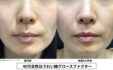
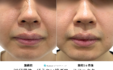
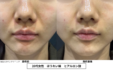
Real Patient Cases: Nasolabial Fold Treatments
To make the information easier to understand, here are some actual patient cases.

Treating Creases That Remain Visible at Rest
This case involved growth factor injections for nasolabial creases that remained visible even with a relaxed expression and were unlikely to improve through facial muscle movements alone.
View This Patient’s Treatment Details and Progress
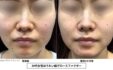
Pronounced Nasolabial Folds Extending Toward the Corners of the Mouth
This patient is a woman in her 40s. She received growth factor treatment for pronounced nasolabial folds that extended near the corners of her mouth and remained clearly visible even at rest.
View This Patient’s Treatment Details and ProgressLearn More About Growth Factor Treatment for Nasolabial Folds
CONSULTATION
Not sure whether to continue facial exercises?
Start by identifying the cause of your nasolabial folds.
You do not need to decide on an aesthetic procedure before coming to see us. We can assess your current condition and discuss whether facial exercises, self-care, or medical treatment may be appropriate.
For Nasolabial Fold Self-Care, Reducing Aggravating Factors Matters More Than Training Harder
There are things you can do even if you do not want an aesthetic medical procedure.
For people concerned about nasolabial folds, I would generally recommend reducing unnecessary stress on the skin before adding more vigorous facial exercises.
Sun Protection
Ultraviolet exposure contributes to the loss of collagen in the skin, so consistent use of sunscreen is important.
Moisturizing
Dryness can make fine lines more noticeable, so choose a moisturizer that suits your skin and use it consistently.
About Our Clinic’s Skincare Cream Developed for People Concerned About Nasolabial Folds
Avoid Vigorous Massage
There is no need to pull or rub the skin forcefully in an attempt to erase nasolabial folds.
Avoid Exaggerating Facial Expressions Unnecessarily
There is no need to avoid ordinary smiles, but I do not think it is necessary to repeat exaggerated facial expressions dozens of times as an exercise.
For more self-care advice, see Nasolabial Fold Prevention and Self-Care.
Summary
Strengthening the facial expression muscles more intensely is not necessarily the best way to improve nasolabial folds.
There is not yet sufficient medical evidence to establish the aesthetic benefits of facial exercises. Unlike many muscles elsewhere in the body, facial expression muscles move and repeatedly fold the overlying skin when they contract.
Therefore, for people whose creases linger after smiling or are already clearly visible at rest, an approach based on “moving the muscles more to strengthen them” may not be suitable.
However, facial expressions are not the only cause of nasolabial folds. The skin, bone structure, cheek fat, sagging, and hollows beside the nose must also be considered.
Before deciding whether to continue facial exercises, I believe the most important step is to understand why your nasolabial folds are noticeable now.
Frequently Asked Questions
Do Facial Exercises Really Help Nasolabial Folds?
Some small studies have reported changes in facial appearance following facial exercises, but the medical evidence is not strong enough to conclude that they improve nasolabial folds or reverse facial aging. I do not think there is anything wrong with natural facial expressions, but I would not recommend vigorous movements repeated dozens of times solely to erase nasolabial folds for every patient.
Can Facial Exercises Make Nasolabial Folds Worse?
We cannot say that facial exercises always worsen nasolabial folds. However, strong facial muscle contractions also fold the skin. If creases linger after smiling or remain visible at rest, I think it may be worth reconsidering exercises that repeatedly and forcefully fold the same areas.
Should I Try Not to Smile Normally?
No. You do not need to avoid smiling just because you are concerned about nasolabial folds. Making natural expressions in everyday life is different from repeatedly creating deep folds in the skin through exaggerated training movements.
Can Facial Massage Improve Nasolabial Folds Instead?
A change in temporary puffiness may make the face look more defined, but massage alone will not remove structural hollows or established skin creases. I do not recommend forceful rubbing or pulling of the skin.
Creases Stay After I Smile. Should I Stop Facial Exercises?
At the very least, I do not think there is a need to increase exercises that strongly fold the skin around the nasolabial area. Persistent creases after smiling may be related to both repeated expressions and reduced skin firmness. I recommend assessing your skin’s condition before deciding how to proceed.
Which Treatment Is Best If Facial Exercises Do Not Help?
The answer depends on the cause. Botox may be considered when muscle movement is a major factor; growth factor injections for persistent skin creases; and hyaluronic acid fillers for hollows beside the nose or pronounced contour differences. If sagging or cheek fullness is significant, other approaches may also be needed.
OSAKA / TOKYO / NAGOYA
Before continuing with trial-and-error exercises,
let’s identify what is causing your nasolabial folds.
You are welcome to consult us even if you are unsure whether to continue facial exercises or whether self-care alone is sufficient. We will not pressure you into treatments you do not need.
Related Articles
- Causes of Nasolabial Folds
- Nasolabial Fold Prevention and Self-Care
- Types of Nasolabial Folds
- Nasolabial Folds When Smiling
- Why Foundation Settles into Nasolabial Folds
- Hollows Beside the Nose
- Nasolabial Folds and Cheek Fat
- Botox for Nasolabial Folds When Smiling
- Growth Factor Treatment for Nasolabial Folds
- Comparing Injectable Treatments for Nasolabial Folds






 03-6434-7678
 オンライン相談
 来院予約