
 電話で予約
 WEB予約
 LINEで予約


 Author:
Houreisen Skin Clinic – Specializing in Nasolabial Fold and Wrinkle Treatments
Osaka Houreisen Skin Clinic / Tokyo Houreisen Skin Clinic / Nagoya Houreisen Skin Clinic
Dr. Shinya Sasagawa, Representative of Shingetsukai Medical Corporation – Meet Our Doctors
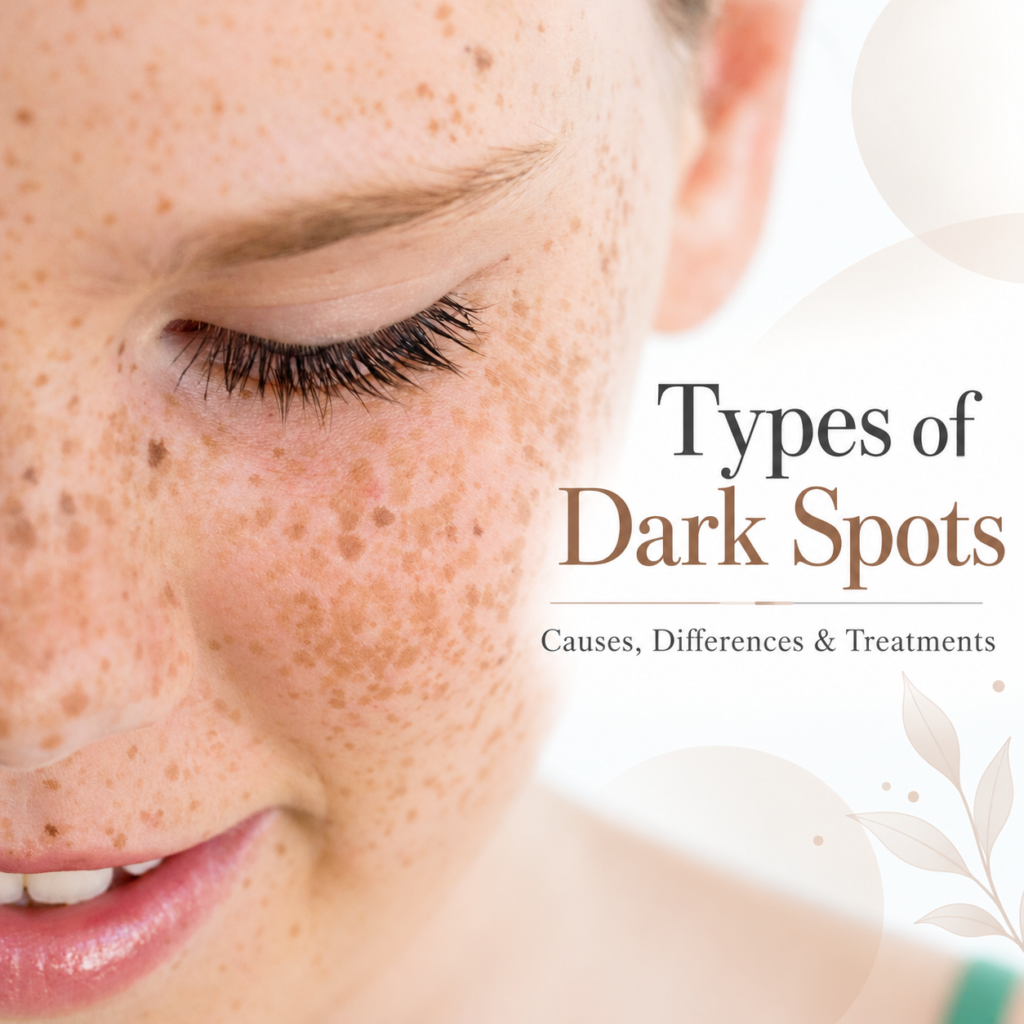
In this article, we explain the different types of skin discoloration commonly referred to as “dark spots” and the treatments available for each.
目次
Many patients visit our clinic hoping to have their dark spots removed.
However, what appears to be a dark spot may actually be a wart, mole, or birthmark.
Because the appropriate treatment depends on the type of lesion, an accurate diagnosis and careful selection of treatment are essential.
Solar Lentigines (Age Spots or Sun Spots)
One of the most common types of dark spots is solar lentigines, also called age spots or sun spots.
When people refer to dark spots, they often mean solar lentigines. Their main causes include aging and cumulative ultraviolet (UV) damage.
Repeated UV exposure can stimulate melanocytes, the cells responsible for producing melanin, leading to increased pigmentation. Solar lentigines can occur in people of any gender and tend to become more common with age.
They often appear from the 30s onward, although people with substantial sun exposure may develop them as early as their teens. They can occur on any sun-exposed area, including the face, hands, and neck. They are often round or oval with relatively well-defined borders.
Treatment Options
– Spot laser treatment or laser toning
– Intense pulsed light (IPL) photofacial treatment
– Chemical peels
– Topical retinol or hydroquinone
Does Spot Laser Treatment Hurt?
The sensation is often described as similar to a rubber band snapping against the skin. We cool the treatment area before applying the laser to help reduce discomfort.
At our clinic, we use the TRI-BEAM PREMIUM Q-switched Nd:YAG laser for spot treatments.
Downtime and Aftercare
Redness or a stinging sensation may occur after laser treatment. Apply the topical medication provided by the clinic and protect the treated area with tape as instructed.
We also offer NAVISION DR Spots Cover, a concealing foundation developed by Shiseido for treated areas, for JPY 2,200 (tax included).
A scab may form and usually falls off naturally within approximately 1-2 weeks. Until then, avoid rubbing or irritating the area and maintain careful UV protection.
Risks and Side Effects
Temporary redness and stinging may occur immediately after treatment. Post-inflammatory hyperpigmentation may also develop during the first 1-2 months after laser treatment.
Gentle skincare and UV protection are important. Depending on your skin condition, we may also recommend topical retinol or hydroquinone and oral medications such as tranexamic acid and vitamins C and E.
In rare cases, hypopigmentation may occur, leaving part of the treated skin lighter than the surrounding area.
Below are before-and-after photographs of patients who received spot laser treatment at our clinic.
Melasma
Melasma is a type of pigmentation commonly seen in women in their 30s to 60s. It typically appears as brown patches with indistinct borders on both cheeks, often in a symmetrical pattern.
Melasma may also appear on the temples, around the mouth, or on the forehead. It can coexist with solar lentigines and may resemble acquired dermal melanocytosis (ADM), which can make diagnosis and treatment selection more difficult.
The exact cause of melasma is not fully understood, but hormonal influences on pigment-producing cells are thought to play a role. Changes in pigmentation have been reported in association with pregnancy, childbirth, oral contraceptive use, and menopause.
UV exposure, stress, and chronic irritation or inflammation caused by friction during cleansing and skincare may worsen melasma. Daily sun protection and minimizing physical irritation are therefore important.
Conventional high-intensity spot laser treatments and IPL have traditionally been avoided in areas affected by melasma because inflammation may worsen the pigmentation. However, laser toning, which uses lower laser energy, may be considered in selected cases. It is generally used alongside oral or topical treatment and appropriate skincare rather than as a stand-alone approach.
Treatment Options
– Laser toning
– Electroporation or iontophoresis
– Oral vitamin C or tranexamic acid, when appropriate
– Topical tretinoin or hydroquinone
Treatment Time
Approximately 5-30 minutes, depending on the treatment area.
Downtime After Laser Toning
Temporary redness or stinging may occur immediately after treatment. Iontophoresis or a soothing mask may help calm the skin.
Downtime is generally minimal, and makeup can usually be applied immediately after the procedure, depending on your skin’s condition.
Because the skin may be more sensitive after laser exposure, avoid irritation and protect your skin from UV radiation.
Recommended Treatment Intervals
Sessions 1-5: Approximately once every 2-3 weeks.
Sessions 5-10: Approximately once every 3-4 weeks.
Afterward, maintenance treatments may be recommended approximately once every 1-3 months, depending on your skin condition and response.
Risks and Side Effects
Redness, hyperpigmentation, and hypopigmentation (lightening of the skin).
Freckles (Ephelides)
Freckles, medically known as ephelides, are more commonly seen in people with fair skin and have a genetic component. They may begin appearing around the age of 3 and often become more noticeable during adolescence.
They are usually small brown spots measuring 3 mm or less, scattered mainly across the nose and cheeks. Sun exposure can make freckles darker, and they may recur even after treatment.
Treatment Options
– Spot laser treatment or laser toning
– IPL photofacial treatment
– Topical tretinoin or hydroquinone
Because freckles often consist of many small spots spread over a broad area, IPL, which can treat wider areas, and topical agents such as tretinoin or hydroquinone may be considered. Individual freckles may also be treated with a spot laser.
Post-Inflammatory Hyperpigmentation (PIH)
Post-inflammatory hyperpigmentation (PIH) is discoloration that develops after the skin has been inflamed. Inflammation from insect bites, acne, or dermatitis can stimulate melanocytes and increase pigment production. Many cases gradually fade over several months, often within approximately 3-6 months, although some take longer.
PIH can appear on the face as well as on the back, chest, elbows, knees, and most other areas of the body. Repeated friction, such as vigorous scrubbing while bathing or pressure from tight clothing, may also contribute to pigmentation.
Treatment Options
– Electroporation or iontophoresis
– Topical tretinoin or hydroquinone
Because PIH often fades naturally over time, observation without active treatment may be appropriate. When treatment is desired, relatively gentle approaches may be chosen, including iontophoresis or oral preparations containing vitamin C or tranexamic acid, superficial chemical peels, and topical hydroquinone.
Seborrheic Keratosis (Age-Related Warts)
Seborrheic keratosis, sometimes called an age-related wart, is a common benign skin growth associated with aging.
Although it can develop anywhere on the body, it is commonly seen on the face and neck, which are frequently exposed to sunlight.
It is medically distinct from a flat pigmented spot, but it may be mistaken for one because it can range from light brown to dark brown or black. Lesions vary from a few millimeters to several centimeters in size and often have a raised, rough surface.
Treatment Options
– Liquid nitrogen cryotherapy
Because seborrheic keratoses are raised lesions, CO2 laser treatment or liquid nitrogen may be used to remove the growth. For some relatively flat lesions, a Q-switched laser may also be considered to target pigment.
At our clinic, we use the EDGE ONE CO2 laser for certain wart and mole removal procedures.
Melanocytic Nevi (Moles)
Moles, also known as melanocytic nevi, are growths of pigment-producing cells that may appear light brown, dark brown, or black. Lighter moles are sometimes mistaken for ordinary dark spots. They may be present at birth or develop during childhood or adulthood. Moles can be flat or raised and can occur almost anywhere on the body.
Treatment Options
– CO2 laser
– Electrosurgery or surgical excision
Treatment options include CO2 laser removal, electrosurgery, and surgical excision with sutures. The most appropriate method depends on the mole’s size, characteristics, and clinical assessment.
Acquired Dermal Melanocytosis (ADM)
Acquired dermal melanocytosis (ADM) is a type of dermal pigmentation that often develops after puberty and is more common in women. It appears as brown, gray-brown, or slightly bluish spots caused by pigment-producing cells located deeper in the skin, within the dermis. ADM can appear on the temples, cheeks, or sides of the nose, sometimes on both sides of the face.
Treatment Options
– Q-switched laser or picosecond laser
Because the pigment is located deep in the skin, Q-switched and picosecond lasers are the main treatment options. After treatment, oral tranexamic acid or topical depigmenting agents may be considered to help manage post-inflammatory pigmentation when appropriate.
In some cases, laser treatment may be eligible for Japanese health insurance coverage, depending on the diagnosis and applicable requirements.
Final Thoughts: How to Help Prevent Dark Spots
Sun protection is an essential part of preventing and managing many types of dark spots. Apply sunscreen throughout the year, not just in summer, and consider additional protection such as a hat or parasol.
As skin renewal tends to slow with age, pigment may become more persistent. Depending on your skin condition, treatments such as periodic chemical peels and carefully selected vitamin A-derived skincare products may help maintain skin texture and address pigmentation concerns.
It is also important to minimize unnecessary rubbing and friction. In particular, avoid vigorous scrubbing during cleansing, rubbing your face aggressively with a towel, forcefully massaging skincare products into the skin, and excessive facial massage.

 03-6434-7678
 オンライン相談
 来院予約