
 電話で予約
 WEB予約
 LINEで予約


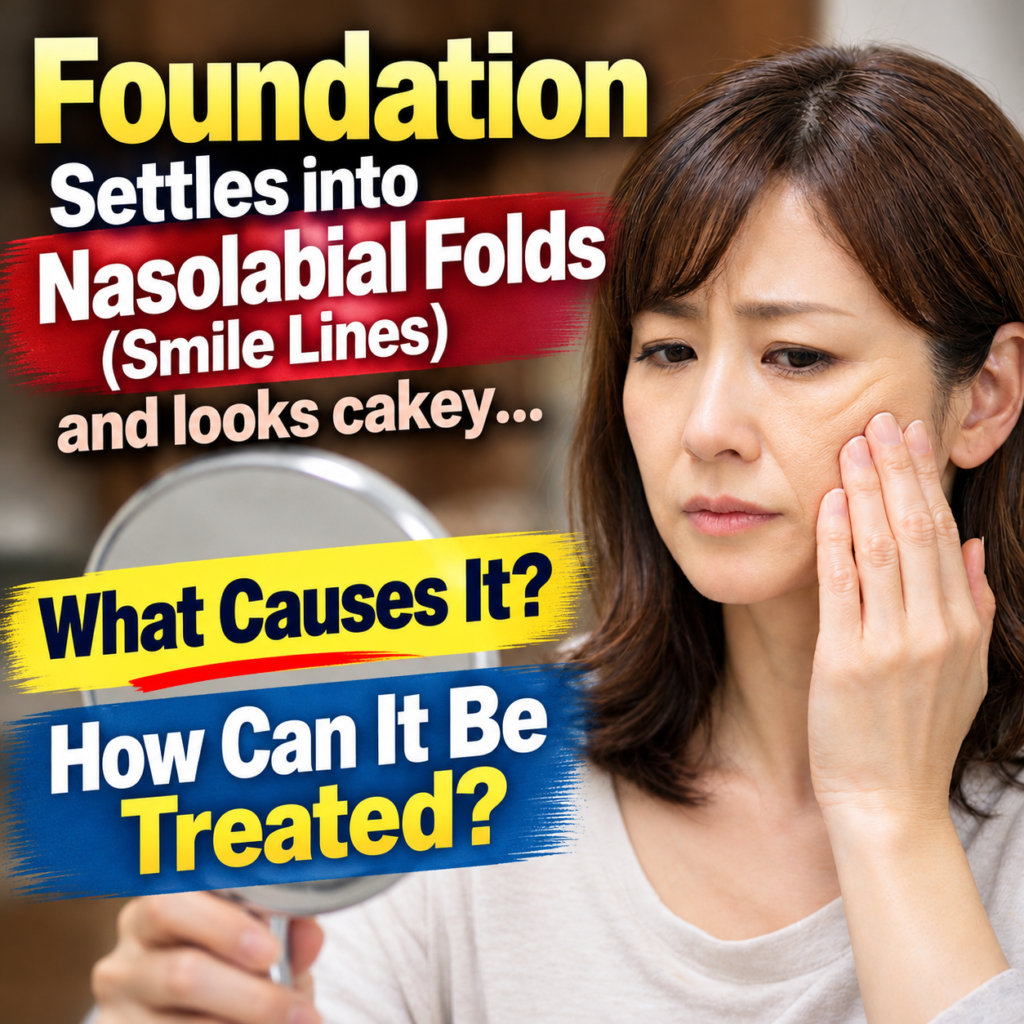

“My makeup looks great in the morning, but by the evening, foundation has settled into my smile lines. What can I do?”
We often hear questions like this from patients.
In short, if the main causes are applying too much foundation or having dry skin, adjusting your makeup technique and skincare routine may make the problem less noticeable.
However, if lines or shadows remain around your nasolabial folds even after removing your makeup and moisturizing, switching foundation alone may not solve the problem.
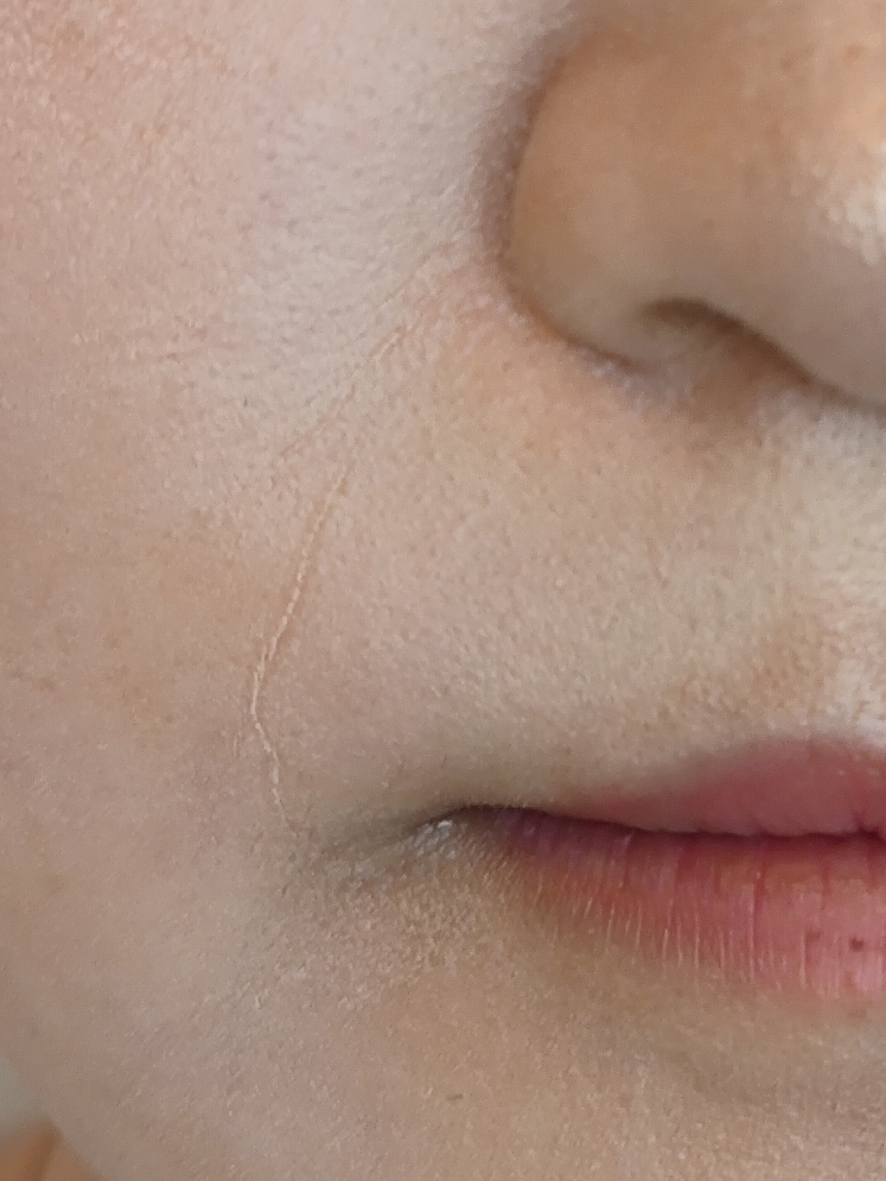
When foundation collects in a crease, it can make a nasolabial fold look more defined than it actually is.
What you will learn in this article
Three Reasons Foundation Settles into Nasolabial Folds
1. Applying too much foundation to an area that moves with facial expressions

Nasolabial folds bend repeatedly when we talk, eat, or smile. Even if your foundation looks smooth in the morning, the movement around your mouth can cause it to gather in the creases throughout the day.
Repeatedly layering foundation in an attempt to cover smile lines can leave a thick layer that actually emphasizes the folds. Try using only the small amount left on your makeup sponge after applying foundation to the rest of your face.
For practical application tips, see our guide tomakeup techniques for concealing nasolabial folds.
2. Dryness prevents foundation from adhering evenly
When skin is dry and its outer barrier is disrupted, foundation may spread unevenly and accumulate in fine lines and creases.
After cleansing, apply your usual moisturizer, let it absorb, and then build up your base makeup in thin layers. If excess product remains on the surface, gently blot it with a tissue rather than rubbing the skin.
For more on daily moisturizing and sun protection, read our guide tonasolabial fold prevention and self-care.
3. Wrinkles or hollows remain even without makeup
If a line remains visible at rest after removing your foundation, it may have become etched into the skin. Foundation can also gather along a contour change caused by a hollow beside the nose or cheek tissue that overhangs the fold.
Nasolabial folds are influenced byseveral factors, including the skin, facial fat, bone structure, and facial expressions. Similar-looking folds may therefore require different approaches.
For more information about wrinkles etched into the skin, read our article onthe causes and treatment of deep, etched nasolabial fold wrinkles.
Foundation collecting in smile lines does not automatically mean that a cosmetic procedure is necessary. First, determine whether makeup application, dryness, or a wrinkle or hollow that remains at rest is the main issue.
Makeup Tips You Can Try Today to Prevent Foundation Creasing
Instead of applying more foundation, start by reducing the amount that remains over the nasolabial folds.
Allow moisturizer to absorb before applying makeup
Applying makeup while a heavy layer of moisturizer remains on the skin can cause foundation to shift. Let your skincare settle before starting, without vigorously rubbing the area.
Avoid adding extra foundation directly to smile lines
After applying foundation to your cheeks and forehead, gently blend the small amount left on your sponge around the mouth. The goal is not to fill the crease with a thick layer of makeup.
Move your mouth once, then blend away any product in the crease
After applying your makeup, gently move your facial muscles and use a sponge to lightly blend away foundation that has accumulated in the nasolabial folds.
Avoid layering more product over creased makeup
During the day, remove or blend away excess foundation with a tissue or sponge first. Add only a thin layer if needed.
How to Tell Whether the Problem Is Makeup or a Wrinkle Visible at Rest
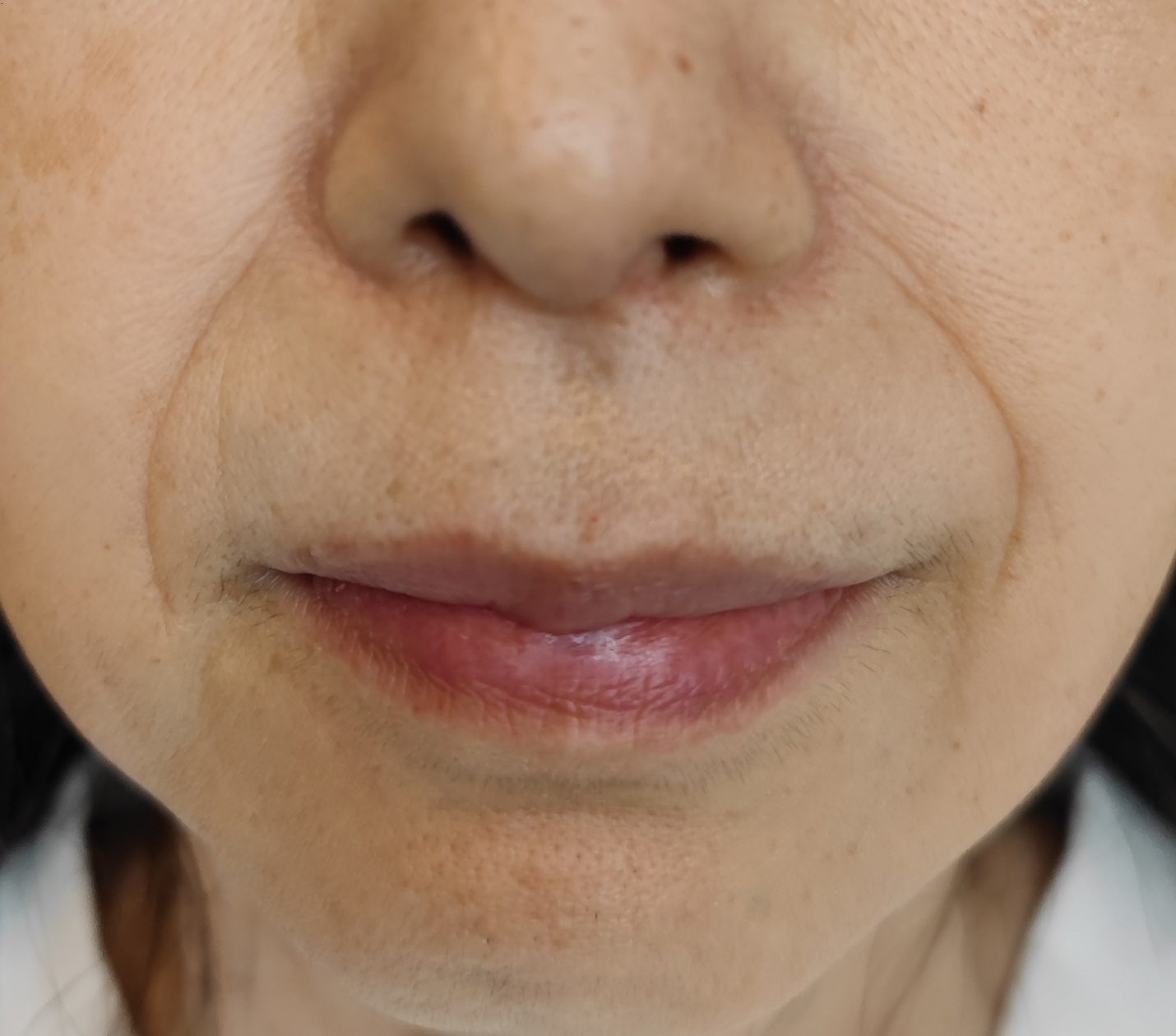
The following steps are not a medical diagnosis, but they can help you decide whether to change your makeup routine or consult a doctor.
Remove your makeup and moisturize as usual
Wait until your skin has settled. Assessing it immediately after rubbing or while it is very dry can be misleading.
Examine your relaxed face from the front and at an angle
Look for an actual crease in the skin versus a shadow caused by a hollow beside the nose or a step between the cheek and fold. Avoid judging solely under very bright overhead lighting, which can wash out wrinkles.
Smile, relax your face, and check whether the line remains
A line that appears only when smiling can have different causes from a crease that stays visible after your face returns to rest.
When adjusting your makeup may be the best first step
If your bare skin shows almost no crease and foundation collects only after several hours, start by changing how much you apply and how you blend it.
When it may be helpful to have the cause assessed by a doctor
If a wrinkle or hollow remains visible on a relaxed face after moisturizing, makeup alone may not fully address it. Depending on your concerns and goals, a treatment consultation may be useful.
We also explain these differences in our guide tothe types of nasolabial folds.
Treatment Depends on Whether the Main Issue Is a Wrinkle, a Hollow, or a Shadow
Below, we compare growth factor injections, which aim to improve skin wrinkles over time, with hyaluronic acid fillers, which directly restore volume to hollows.
Compare Treatment OptionsWhat Self-Care Can and Cannot Do

What self-care can help with
Moisturizing and UV protection help maintain healthy skin and may reduce the appearance of dryness-related fine lines. Applying less foundation and minimizing friction can also help.
What self-care usually cannot correct
Self-care alone is unlikely to eliminate wrinkles that remain at rest or restore significant hollows beside the nose or contour changes between the cheek and nasolabial fold.
Vigorous facial massage can cause irritation and redness. Massage or facial exercises alone may not adequately improve established smile lines visible at rest. Avoid excessive force, even if you want quick results.
For more details, see our articles onprecautions with facial exercisesandfacial massage and nasolabial folds.
Choosing Treatment Based on Where Foundation Collects in the Smile Lines
When considering treatment, the question is not whether growth factors or hyaluronic acid are universally better.The cause of foundation creasing, the desired result, and how soon you want to see a changeshould guide the choice.
A crease remains in the skin
If a fold remains visible at rest and foundation settles into that line, a treatment intended to gradually improve skin firmness and thickness may be considered.
There is a hollow beside the nose or in the upper fold
If makeup gathers where a hollow meets surrounding tissue, restoring lost volume and lifting that depression directly may be more appropriate.
| Comparison | Growth Factors | Hyaluronic Acid |
|---|---|---|
| Main purpose | Growth FactorsGradually improve the underlying skin structure over time for a longer-lasting change. | Hyaluronic AcidRestore lost volume and directly lift depressed areas. |
| Who may benefit | Growth FactorsPeople whose skin creases remain visible even after removing makeup. | Hyaluronic AcidPeople concerned about hollows or contour steps beside the nose or in the upper nasolabial fold. |
| When results appear | Growth FactorsChanges generally develop over approximately 3–6 months. Some people notice changes after about one month, but we usually assess results at around six months. | Hyaluronic AcidResults are often noticeable immediately after injection. |
| Limitations | Growth FactorsGrowth factors alone may not adequately lift a deep hollow or pronounced volume deficit. | Hyaluronic AcidResults generally last for a shorter period than those of growth factor treatment. |
For a more detailed comparison, readGrowth Factor Injections vs. Hyaluronic Acid Fillers. For an overview of injectable treatments, seeour comparison of injections for nasolabial folds.
Growth Factor Injections: Gradually Improving Skin Firmness
Our growth factor injections for nasolabial folds aim to stimulate processes involved in collagen and elastin production, improving skin firmness and thickness and making wrinkles less noticeable. Results vary between individuals.
Unlike hyaluronic acid fillers, this treatment does not immediately lift a hollow through the physical volume of the injected product. Changes typically develop over approximately 3–6 months. Some patients notice improvement in about a month, but at our clinic we generally compare before-and-after photographs at approximately six months to determine whether any further treatment is needed.
We may consider this treatment when foundation primarily collects in an etched skin crease or when a patient prefers gradual, natural-looking changes rather than an immediate effect. If a deep hollow beside the nose or a major volume deficit is the main issue, we may prioritize hyaluronic acid or consider a combination.
Learn More About Growth Factor Treatment for Nasolabial Folds
For information on swelling and bruising immediately after treatment, readrecovery and downtime following growth factor injections. For further information on adverse effects, seegrowth factor injection side effects and risks.
Case 1: Woman in Her 20s — Before and Four Months After Treatment
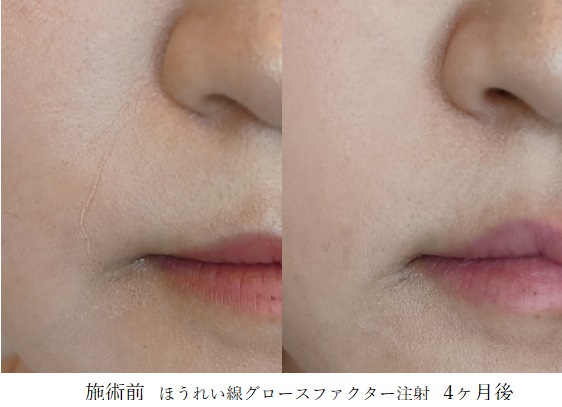
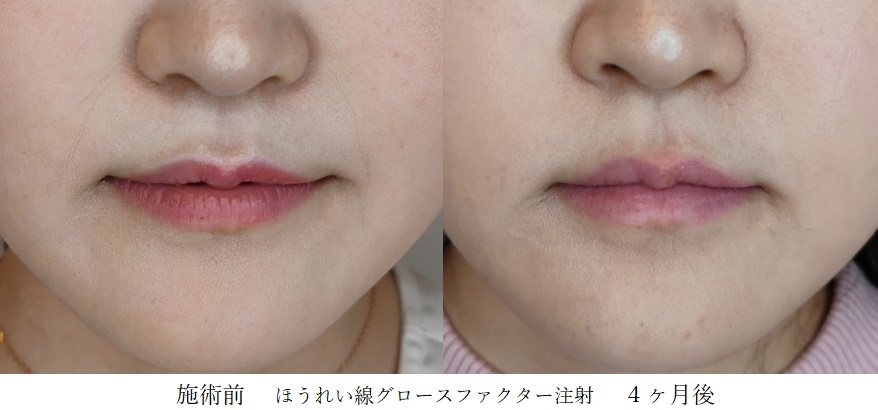
This woman in her 20s felt that her nasolabial folds were more visible than those of her friends, particularly because foundation collected in them after smiling. She was also concerned about comments from others that she was known for having prominent smile lines. She underwent growth factor injections. In the photographs taken before treatment and four months later, the creases that had remained visible at rest appeared less noticeable.
Treatment outcomes and recovery vary between individuals.
View This Patient’s Treatment Details and ProgressCase 2: Woman in Her 50s — Before and Three Months After Treatment
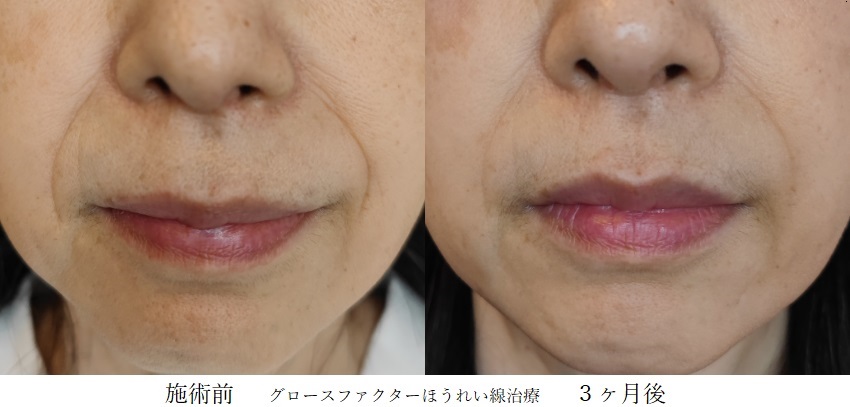
This woman in her 50s had noticed her nasolabial folds deepening with age. They were visible not only when smiling but also at rest, with deeply etched skin creases. Three months after growth factor treatment, the wrinkles appeared softer than before treatment.
Treatment outcomes and recovery vary between individuals.
View This Patient’s Treatment Details and ProgressCase 3: Woman in Her 50s — Before and Three Months After Treatment
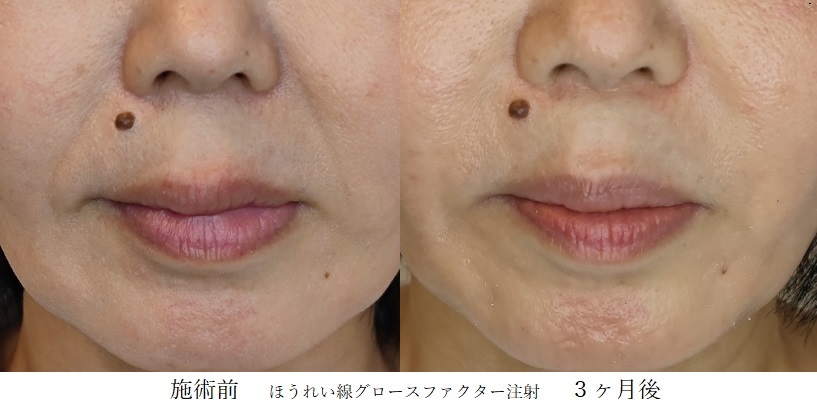
This patient had fuller cheeks and some facial asymmetry. She worked night shifts and was bothered by how prominent her nasolabial folds looked after work. Her concerns involved both a line where foundation collected and shadows caused by cheek fullness. Three months after growth factor treatment, the folds and asymmetry appeared less noticeable.
Treatment outcomes and recovery vary. The linked case page also includes follow-up through six months.
View This Patient’s Treatment Details and ProgressHyaluronic Acid Fillers: Restore Volume for a More Immediate Change
Hyaluronic acid fillers replenish lost volume and directly lift hollows beside the nose or in the upper nasolabial fold. Because changes are visible soon after injection, they may suit patients seeking a faster improvement.
However, the precise injection site, depth, and amount are critical. Injecting too much into an area that is not actually hollow can make the mouth area appear heavy or even emphasize the nasolabial folds. At our clinic, we assess the relationship between the hollows and cheeks from both frontal and oblique angles.
If deep lines are etched into the skin, surface wrinkles may remain even after volume has been restored. In such cases, we assess whether growth factor treatment may have a complementary role.
Learn More About Hyaluronic Acid Fillers for Nasolabial Folds
Warning Signs After Hyaluronic Acid Injections: Contact a Medical Provider Immediately
If you experience unusually severe pain, pain that increases over time, whitening or purple discoloration of the skin around the injection site, changes in vision, drooping eyelids, difficulty moving an arm or leg, or trouble speaking, contact the medical facility where you were treated immediately rather than waiting to see if symptoms resolve. Even without pain, these other symptoms require urgent attention.
For more detailed information, readhyaluronic acid filler side effects and risks.
Case: Woman in Her 30s — Before and One Month After Injection
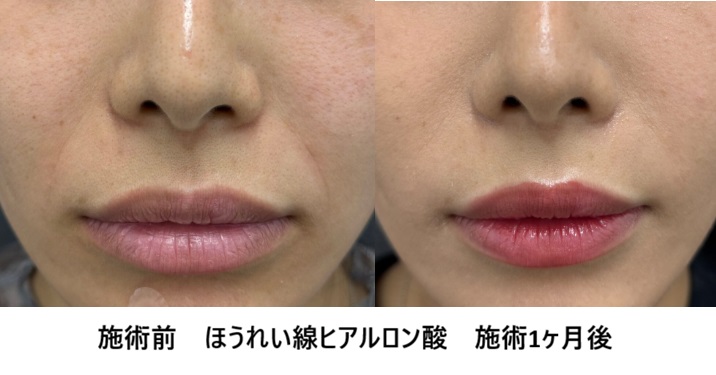
This woman in her 30s was concerned that foundation collected in her nasolabial folds over the course of the day or after smiling. Hyaluronic acid was injected into the hollows beside the nose and the upper nasolabial folds. The photographs compare her appearance before treatment and one month afterward, when the upper folds and hollows appeared less noticeable.
Treatment outcomes and recovery vary between individuals.
View This Patient’s Treatment Details and ProgressFor up-to-date treatment fees, please check ourprice list. The listed amounts include consumption tax, medical consultation, needles, and anesthesia. The total may vary by product, required amount, and treatment area. A consultation fee of ¥5,500 may apply in certain circumstances, including repeated consultation-only visits, extended consultations, or depending on the nature of the consultation.
Frequently Asked Questions About Foundation and Nasolabial Folds
Q. Does foundation settle into smile lines because of aging?
Age-related loss of skin firmness is one factor, but not the only one. Foundation quantity, dryness, facial movements, underlying facial structure, hollows beside the nose, and cheek tissue may all contribute. This can also happen to younger people.
Q. Will switching foundations solve the problem?
If overapplication or dryness is the main cause, changing the amount, application technique, or product may help. If a wrinkle or hollow remains visible at rest even after moisturizing, foundation alone may not solve the issue.
Q. If the wrinkles remain after removing makeup, do I need treatment?
No. Whether to undergo treatment depends on how much the issue bothers you and what you hope to achieve. Continue moisturizing and protecting your skin from the sun, and consider treatment only if makeup cannot adequately address your concerns and you would like improvement.
Q. Which is better for me: growth factor injections or hyaluronic acid fillers?
Growth factor treatment may be considered when wrinkles etched into the skin are the main concern; hyaluronic acid fillers may be considered when hollows or contour changes beside the nose or in the upper nasolabial fold are more prominent. When both contribute, a limited combination may sometimes be appropriate.
Q. Can I have a consultation even if I have not chosen a treatment?
Yes. You do not have to decide on treatment before booking. During consultation, we assess your relaxed and smiling expressions, skin creases, hollows beside the nose, and cheek contours. We explain appropriate options and their advantages and disadvantages, and you may take time to consider our recommendations before deciding.
References
- Fisher GJ, Kang S, Varani J, et al. Mechanisms of photoaging and chronological skin aging. Arch Dermatol. 2002;138(11):1462-1470.
- Varani J, Dame MK, Rittie L, et al. Decreased collagen production in chronologically aged skin: roles of age-dependent alteration in fibroblast function and defective mechanical stimulation. Am J Pathol. 2006;168(6):1861-1868.
- Pharmaceuticals and Medical Devices Agency (PMDA). Juvéderm VISTA VOLIFT XC: Electronic Package Insert (Japanese).
Summary: First Distinguish Makeup Issues from Wrinkles or Volume Loss
When foundation collects in nasolabial folds, the first solution is not to apply another thick layer. Try moisturizing, applying a thin layer, and checking whether wrinkles or hollows remain visible after you remove your makeup.
If your bare skin has little or no visible crease, focus on makeup application and dryness. If a crease remains visible at rest, growth factor injections may be considered. If a hollow or step beside the nose or in the upper fold is the main concern, hyaluronic acid fillers may be more suitable. Often, more than one factor contributes.
At our clinic, we do not begin by choosing a procedure. Instead, we assess where foundation collects and how the folds look at rest and when smiling, then discuss only treatments that may actually be needed.
You Don’t Have to Choose Between Concealing and Treating Smile Lines on Your Own
During a consultation, we assess skin creases, hollows beside the nose, differences in cheek contour, and changes with facial expressions. We explain not only potential results but also treatment limitations, downtime, risks, and costs.
You do not need to decide on treatment before booking. We do not pressure patients into unnecessary procedures, so you are welcome to visit simply to understand your current skin condition.
Treatment outcomes and recovery vary between individuals. You are welcome to take time to consider the proposed plan or choose not to proceed after consultation.









 03-6434-7678
 オンライン相談
 来院予約