
 電話で予約
 WEB予約
 LINEで予約



WHAT YOU SHOULD KNOW FIRST
Why Do Nasolabial Folds (Smile Lines) Look Deeper in Dim Lighting?
Have you ever finished your makeup in a brightly lit room in the morning without noticing your smile lines, only to catch your reflection in a train window on the way home or in a dim bathroom mirror and feel as though your nasolabial folds had suddenly become deeper?
In dim surroundings, the direction and intensity of light can create darker shadows along the boundary between the cheeks and nasolabial folds. Uneven skin tone, visible pores, cheek fullness, depressions beside the nose, and temporary puffiness can also make these folds look deeper than they actually are.
- Your wrinkles have not necessarily worsened in a short period of time.
- Lighting, skin texture, cheek contours, and puffiness all affect their appearance.
- Treatment should be considered after examining the face under good lighting and with different expressions.
For a broader introduction to smile lines, see our complete guide to nasolabial folds as well.
Why Do Smile Lines Look More Pronounced in Dim Lighting?
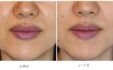
First, look at the two photo comparisons below. In each, the nasolabial folds appear deeper in the image taken under darker lighting conditions.


With bright light coming from the front, the face is illuminated more evenly, softening shadows where the cheek meets the nasolabial fold. In dim lighting, or when light comes from above or the side, shadows follow the contours of the face and accentuate creases and changes in surface height. In addition to brightness, the light source’s direction, softness, distance, the angle of the face, and the camera’s exposure and color settings can all affect the result.
Train windows are a common example: the surrounding area is often dark, while overhead carriage lights illuminate the face from above.
Watch: Tips for making smile lines look less pronounced in photos
Learn about different types of nasolabial folds
Four main categories of causes of smile lines
Four Factors That Make Smile-Line Shadows Look Darker
Light from above or the side can cast a shadow along the boundary between the cheek and the nasolabial fold.
Uneven pigmentation, enlarged pores, and dry, uneven skin can increase light-and-shadow contrast.
Bone structure, fat distribution, and sagging cheek skin all influence the shape of the shadow.
When the cheeks become temporarily fuller, the step between them and the smile-line crease may become more noticeable.
Uneven Skin Tone, Dryness, and Visible Pores

Dullness or uneven pigmentation around the nasolabial folds can increase the contrast with the crease and make the shadow look darker. Enlarged pores and tiny irregularities caused by dryness may also become more noticeable when light strikes from an angle.
For makeup, a thin, well-moisturized base with a small amount of concealer blended into shadowed areas often looks more natural than applying a thick layer over the crease. Heavy foundation may settle into the fold over time and make the line look more pronounced.
Cheek Fullness, Fat, and Facial Bone Structure

When the cheeks are full or the area beside the base of the nose is recessed, a difference in height forms on either side of the nasolabial fold. Light coming from the side or above casts a shadow into this contour, making the fold appear darker.
Cheek fullness and sagging depend on facial bone structure, skin elasticity, and the amount and distribution of cheek fat. Excessive fat reduction may hollow the cheeks or make loose skin more noticeable. Therefore, removing cheek fat does not always improve nasolabial folds.
How facial structure affects nasolabial folds
How cheek fat affects nasolabial folds
Depressions beside the nose and upper nasolabial folds
Temporary Facial Puffiness

Facial puffiness can temporarily increase cheek volume, making the transition into the nasolabial fold appear more pronounced. If swelling is related to factors such as high salt intake, alcohol, or insufficient sleep, improving these habits may reduce the puffiness and soften the shadow.
The Crease Itself and Sagging Cheek Skin
Shadows play a major role under dim lighting. However, if a distinct crease is visible even in bright light, reduced skin elasticity, cheek sagging, and depressions beside the nose may also be contributing.
In such cases, it is important to assess the actual depth of the fold, cheek sagging, and the hollow beside the nose rather than relying on lighting or makeup changes alone.
At-Home Tips to Make Shadows Less Noticeable
Compare Your Face Under Consistent Lighting
Do not judge your appearance from a dimly lit mirror alone. Check your face from the front and at an angle under lighting similar to natural daylight. For progress photos, keep the lighting, camera height, head position, and expression consistent.
Use Soft, Frontal Lighting
When applying makeup or joining video meetings, soft light placed slightly above and in front of your face can help avoid harsh shadows across the folds.
Keep Skin Moisturized and Protected from the Sun
Moisturizing can smooth the appearance of tiny uneven areas caused by dryness, while sunscreen helps protect against UV-related skin aging. Apply base makeup in a thin layer rather than building it up inside the crease.
Address Puffiness and Avoid Rapid Weight Changes
If the folds look stronger after a salty meal or drinking alcohol, review your diet and sleep. Avoid forceful facial massage or rapid weight loss, and be mindful of unnecessary changes in facial volume.
Medical Treatments for Smile-Line Shadows
Even when two people both notice their smile lines in dim lighting, the right treatment may differ. Someone with uneven pigmentation may need a different approach from someone with fuller cheeks or hollows beside the nose. At our clinic, we examine the folds in bright lighting, along with cheek volume, nasal-base hollows, and skin condition before recommending treatment.
Uneven tone and skin texture
Laser Toning
Laser toning uses low-energy laser treatment to help reduce the appearance of pigmentation and dullness. Because melasma, other dark spots, and post-inflammatory pigmentation require different approaches, a doctor first evaluates the type of pigmentation.
Possible risks and limitations: redness, dryness, post-inflammatory hyperpigmentation, and loss of pigmentation. Multiple sessions may be needed.
Pores and skin texture
Potenza Prime
Potenza Prime inserts fine needles into the skin and delivers radiofrequency (RF) energy through the needle tips. Different tips and settings can be used to address enlarged pores, fine lines, acne scars, and skin texture.
Possible risks and limitations: redness, swelling, pain, pinpoint bleeding, dryness, pigment changes, and infection.
When Sagging or Heaviness of the Cheeks Makes Shadows More Pronounced
Mild cheek sagging
Medical HIFU
Medical HIFU may be considered when mild sagging around the cheeks or mouth, or loss of definition along the jawline, accentuates shadows. It delivers focused ultrasound energy below the skin to tighten the cheeks and facial contours.
However, HIFU does not directly fill or smooth deep nasolabial creases. Patients with pronounced nasal-base hollows or deep smile lines may find HIFU alone insufficient.
Possible side effects and risks: pain, redness, swelling, and numbness. Rare complications include burns or nerve injury.
Cheek fat
Fat-Dissolving Injections
Fat-dissolving injections may be considered when excess cheek fat creates fullness that accentuates the nasolabial-fold shadow. Treatment is intended to gradually reduce fat in selected areas.
Removing too much fat can hollow the cheeks and make smile lines even more noticeable. We therefore consider the overall balance of the face when determining the treatment area and amount.
Possible side effects and risks: swelling, redness, pain, and bruising.
Hyaluronic Acid and Growth Factors Work Differently
Hyaluronic acid (HA) fillers are injected into depressions beside the nose or along nasolabial folds to restore volume and lift recessed areas directly. Improvements are often visible immediately, but too much product can make the area around the mouth look heavy or unnaturally full. Injection location, depth, and amount are therefore important.
At our clinic, growth factor treatment involves injecting growth factors into the dermis with the aim of stimulating collagen production and gradually reducing the appearance of smile lines. Unlike HA fillers, the effect is not immediate; we generally assess the result at around six months. Concentration, dose, depth, and injection technique are selected according to skin condition and fold depth.
Compare injection treatments for nasolabial folds
Differences between hyaluronic acid and growth factors
Nasolabial fold treatment costs
Before-and-After Treatment Cases
The following cases illustrate results from different treatments. Please also refer to the before-and-after labels within the original clinical photographs.
Case with Cheek Fullness and Asymmetry

A patient with deep nasolabial folds, cheek fullness, and facial asymmetry underwent growth factor treatment.
Main risks: swelling, bruising, discomfort, asymmetry, and uneven skin texture, among others.
Fat-Dissolving Injection Case

Fat-dissolving injections were administered to an area with noticeable cheek fat. Because reducing cheek fat alone is not always appropriate, treatment was planned after evaluating cheek volume and skin laxity.
Main risks: swelling, redness, pain, bruising, and asymmetry, among others.
Medical HIFU Case

HIFU was used to address mild cheek sagging and reduced jawline definition.
Main risks: pain, redness, swelling, and numbness; rare burns or nerve-related symptoms.
Hyaluronic Acid: Woman in Her 40s

Hyaluronic acid was injected from beside the nose to the upper nasolabial fold. The photos compare the appearance before treatment and immediately afterward.
Main risks: pain, swelling, bruising, asymmetry, lumps, infection, and vascular complications, among others.
Growth Factors: Woman in Her 40s

This patient received growth factor injections for nasolabial folds. The photos compare the appearance before treatment and six months afterward.
Main risks: swelling, bruising, discomfort, asymmetry, and uneven skin texture, among others.
Growth Factors: Man in His 50s

Growth factor injections were used to treat deep nasolabial folds. The photos compare the results before treatment and six months afterward.
Main risks: swelling, bruising, discomfort, asymmetry, and uneven skin texture, among others.
Results and recovery vary from person to person. Because this article discusses the impact of lighting, clinical photographs should ideally be compared under consistent conditions, including lighting, exposure, camera angle, and facial expression. Please see the individual case pages for treatment details, session counts, prices, and major risks and side effects.
Book an In-Person Consultation Contact Us / Email Consultation
Summary: If Your Smile Lines Look Darker Only in Dim Light, Check the Lighting First

- Looking deeper in low light does not necessarily mean your wrinkles have suddenly worsened.
- Lighting direction, skin tone and texture, cheek contours, and puffiness can intensify shadows.
- Start by assessing your appearance under consistent lighting and reviewing skincare, makeup, and daily habits.
- Choose medical treatments based on what is actually creating the shadow, rather than treating every crease the same way.
We Start by Identifying When and Why the Shadows Appear
Tell us when you notice the change, such as “only in train windows,” “mainly beside the nose,” or “more noticeable on one side.” During your consultation, we examine nasolabial folds under bright and angled lighting and discuss suitable ways to make them less noticeable.
If you email photos, please use consistent, near-natural lighting and include a front view and angled views from both sides.
Frequently Asked Questions
If My Smile Lines Look Deeper in Dim Light, Does That Mean They Are Getting Worse?
Not necessarily. In dim lighting, or when light comes from above or the side, shadows can form between the cheeks and nasolabial folds, making them look deeper than they are. To assess changes, compare your appearance under the same lighting, camera angle, and facial expression.
Can I Make Smile-Line Shadows Less Noticeable at Home?
Soft frontal lighting, thin base makeup over well-moisturized skin, and addressing habits that contribute to puffiness may soften their appearance. However, self-care cannot change facial bone structure or reliably correct deep, established creases.
Which Is Better for Me: Hyaluronic Acid or Growth Factors?
Hyaluronic acid may be appropriate for patients seeking prompt correction of pronounced hollows beside the nose or deep creases. Growth factor treatment may be considered when reduced skin firmness and lines visible even at rest are the main concerns. We assess fold depth, skin condition, and previous injection treatments before recommending an approach.
How Much Downtime Should I Expect if I Don’t Want Others to Notice?
Downtime depends on the procedure. Injectable treatments may cause swelling or bruising; Potenza Prime can cause redness or pinpoint bleeding; and fat-dissolving injections may cause swelling. Severity and duration vary, so tell your doctor beforehand if you have an important event coming up.
Can a Treatment Plan Be Determined from an Email Consultation Alone?
Photos can support general guidance, but lighting and camera angles change how the folds appear. Treatment suitability and injection placement must therefore be determined during an in-person medical examination. If sending photos, use consistent, near-natural light and include front and both oblique views.
References and Further Information
- Clinical guidelines for aesthetic medicine (Japan Society of Plastic and Reconstructive Surgery publication)
- Japanese Ministry of Health, Labour and Welfare: Guidance on supervision of HIFU procedures
- Dermal Fillers (US FDA)
- US FDA warning on non-approved fat-dissolving injections
- US FDA safety communication on radiofrequency microneedling risks









 03-6434-7678
 オンライン相談
 来院予約