
 電話で予約
 WEB予約
 LINEで予約


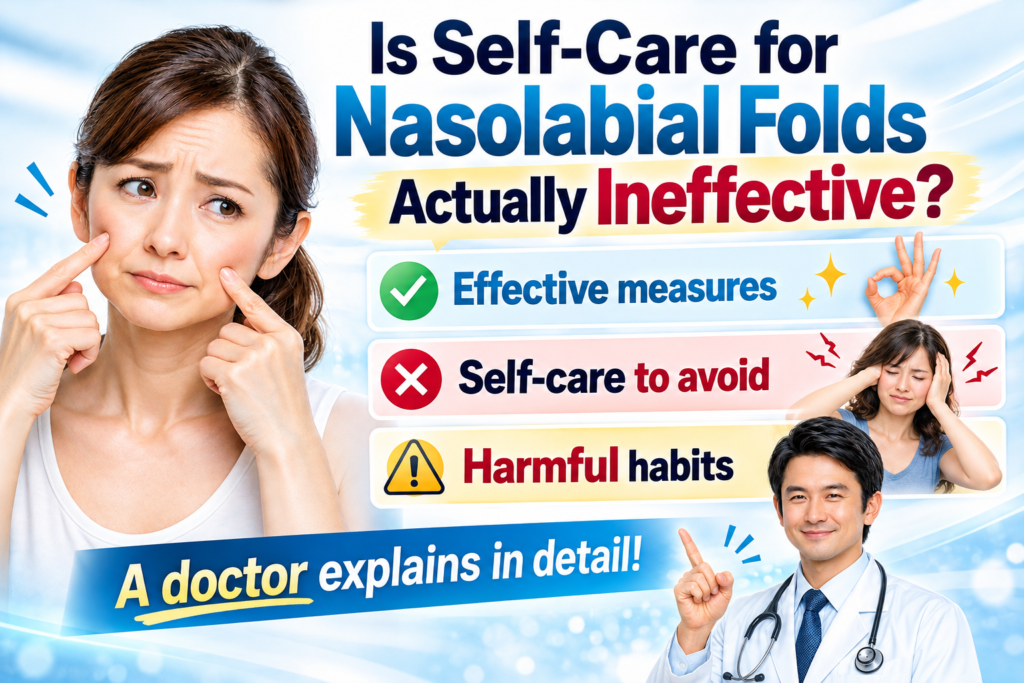
For those who have tried massage, facial exercises, and skincare without results
Why Aren’t My Nasolabial Folds Improving Despite Self-Care?
You massage your face every day, have tried beauty devices and facial exercises, and have even switched to highly recommended skincare products. Yet whenever you look in the mirror, your smile lines still bother you. Are you wondering whether doing more of the same will eventually make a difference?
It can be frustrating to invest so much effort without seeing the changes you hoped for. At our clinic, we often hear from patients who have tried many different approaches without noticing an improvement.
Self-care is most useful for making fine lines caused by dryness less noticeable and protecting the skin against UV exposure and friction. However, self-care alone is unlikely to substantially improve hollows beside the nose, the step between fuller cheeks and the nasolabial fold, or deep lines that remain visible when your face is relaxed.
This article explains which self-care habits are worth continuing, which approaches need caution, and what treatment options to consider when home care is not enough.
What Can Self-Care Really Improve About Nasolabial Folds?
Nasolabial folds are not simply wrinkles on the surface of the skin. Hollows beside the nose, cheek fullness or sagging, facial muscle movements during smiling, and creases within the skin can all contribute to their appearance.
Moisturizers are most likely to improve fine lines caused by dryness around the mouth. Consistent sun protection is also valuable because it helps reduce UV-related damage to collagen and elastin and may help prevent future wrinkles and sagging.
However, when there is a deep hollow beside the nose, cheek tissue overhangs the fold and creates a shadow, or a pronounced crease remains even at rest, moisturizer and massage alone are unlikely to provide meaningful correction.
Self-Care Habits Worth Continuing for Smile Lines

01
Protect Your Skin From UV Exposure Every Day
Ultraviolet radiation can damage collagen and elastin in the skin, contributing to wrinkles and sagging. Daily sun protection is one of the self-care measures worth maintaining year-round.
Reapply sunscreen after sweating or drying your skin with a towel. Hats and parasols can complement sunscreen and help protect areas you may have missed.
02
Moisturize to Make Dryness-Related Fine Lines Less Noticeable
When the skin around the mouth becomes dry, fine lines surrounding the nasolabial folds may become more apparent and foundation can settle into them more easily. After cleansing, gently apply a moisturizer, such as a lotion or cream suited to your skin, without rubbing.
Moisturizing may make fine lines caused by dryness less visible, but it cannot lift deep nasolabial folds or sagging cheeks. Rather than layering expensive products, choose a gentle routine that does not cause redness or stinging and that you can maintain consistently.
03
Support Skin Health Through Diet, Sleep, and Stress Management
Diet
Avoid extreme dietary restrictions. Aim for balanced meals with grains, protein-rich foods such as fish, meat, eggs, and soy products, along with vegetables and fruit. Glycation may impair the function of collagen and elastin, contributing to a loss of firmness and elasticity. Rather than relying heavily on sugary drinks and sweets, focus on the balance of your overall diet.
Sleep
The skin responds to damage caused by daytime oxidative stress, including UV exposure, through ongoing repair processes. Sleep is an important part of recovery. Persistent sleep deprivation can interfere with skin barrier recovery and make dryness and uneven skin texture more noticeable. Before turning to elaborate beauty routines, consider whether you are getting enough sleep.
Stress
Ongoing stress can disrupt sleep and eating patterns, which may also affect how your skin feels and looks. Make room for rest, whether through short walks, baths, hobbies, or other relaxing activities.
Can Facial Exercises Make Nasolabial Folds More Noticeable?

Overdoing facial exercises increases repeated, forceful movement of the muscles around the mouth. As a result, nasolabial folds may look deeper when smiling or making facial expressions.
People with thin skin or reduced skin firmness due to age-related changes or UV exposure may be more likely to notice expression lines persisting when their face returns to rest. If your goal is to reduce smile lines, it may be better to reassess intense facial exercises rather than continue increasing the frequency or effort.


Read More About Facial Exercises and Smile Lines
Why Smile Lines Become Noticeable When You Smile
Avoid Excessive Pressure From Beauty Devices and Massage
Pulling firmly on the skin around your mouth, repeatedly rolling over the same area, or pressing for long periods in an attempt to erase deep smile lines can cause redness and stinging. Repeated friction or inflammation may also contribute to post-inflammatory hyperpigmentation.
Beauty devices work in different ways depending on the model. Follow the manufacturer’s instructions for duration and frequency, and stop if irritation persists. If extended use has not changed your nasolabial folds, increasing the frequency may be less helpful than checking whether hollows beside the nose or cheek volume are the main cause.

Signs Your Smile Lines May Not Respond Much to Self-Care
The following features often respond poorly to skincare and massage alone. Look at your face in good lighting, both at rest and when smiling.
A deep hollow beside the nose
There is a noticeable depression next to the nostril, with a fold extending toward the mouth. Moisturizing cannot physically lift the hollow.
Fuller cheek tissue overhangs the fold
Cheek tissue creates a step and shadow along the nasolabial fold. Massage cannot change the underlying distribution of cheek fat.
A deep crease remains when your face is relaxed
The line remains visible in the same place even when you are not smiling. Dryness-focused skincare alone is unlikely to correct it.
The line becomes pronounced only when smiling
The fold deepens with facial muscle movement. Whether a crease also remains at rest influences the choice of treatment.
Treatments to Consider When Self-Care Is Not Enough
When nasolabial folds do not improve with self-care, we assess any persistent crease at rest, hollows beside the nose, and the height difference between the cheek and the fold. At our clinic, growth factor injections and hyaluronic acid fillers are among the principal options considered.
For etched-in lines and reduced skin firmness
Growth Factor Injections
This treatment is intended to stimulate collagen and elastin production in the skin around the nasolabial folds, gradually improving skin firmness and thickness so wrinkles look less noticeable. Changes typically develop over approximately 3–6 months, with individual variation.
For hollows beside the nose or deep folds requiring more immediate correction
Hyaluronic Acid Fillers
Hyaluronic acid filler is injected into hollows beside the nose or along the nasolabial fold to soften the depth difference. Results are often visible soon after injection. Because fillers may not last as long as the growth factor treatment described here, we tailor the injection volume to the fold’s depth and any asymmetry.
Frequently Asked Questions About Self-Care for Smile Lines
Can self-care alone get rid of nasolabial folds?
Moisturizers can help fine lines caused by dryness, while UV protection helps protect against future photoaging. Deep hollows beside the nose, the step between fuller cheek tissue and the fold, and pronounced creases that remain at rest are unlikely to disappear through self-care alone.
Do facial exercises help nasolabial folds?
Excessively intense facial exercises involve repeated, forceful movement of muscles around the mouth, which can make folds look deeper when smiling or forming expressions. This may be more noticeable in people with thinner skin or reduced skin firmness due to aging or UV exposure, as expression lines can persist at rest. If you notice worsening lines, reconsider the exercise technique or frequency instead of continuing intense facial movements.
Is it okay to continue using beauty devices or facial massage?
Pressing or rubbing too hard, or using a device for too long, may cause redness, inflammation, and later pigmentation changes. If discoloration develops around the nasolabial folds, the resulting contrast may make them look deeper than they are. Avoid irritation that causes pain or redness, and follow the recommended duration and frequency.
Should I choose hyaluronic acid fillers or growth factor injections?
Hyaluronic acid fillers may be considered for more immediate correction of hollows beside the nose or deep folds, whereas growth factor injections may be considered for etched-in wrinkles and loss of firmness. Some people have both concerns, so we assess the folds at rest and when smiling before making a recommendation.
Can I book a consultation without choosing a treatment?
Yes. You do not need to decide on a procedure before booking. During your consultation, we can discuss whether to continue self-care or consider treatment based on your current nasolabial folds and goals.
How to Make Your Smile-Line Self-Care More Effective
It is still worthwhile to maintain appropriate self-care for nasolabial folds. However, repeatedly applying forceful techniques in an attempt to erase deep wrinkles or hollows at home can lead to redness, stinging, dryness, and other skin irritation.
Continue protecting your skin from dryness and UV exposure, while considering medical options when hollows beside the nose or the height difference between the cheek and the fold are the main concern.
If Your Nasolabial Folds Have Not Improved Despite Self-Care
If moisturizing, skincare products, massage, and facial exercises have not helped, the reason may be underlying hollows beside the nose, cheek tissue that creates a shadow over the fold, or reduced skin firmness—features that are difficult to change through self-care alone.
At your consultation, we ask about the self-care routines you have tried and when the folds bother you most. We examine your face at rest and when smiling, and explain both the self-care measures worth continuing and the procedures that may be appropriate for your concerns.
You are welcome to book before deciding on treatment. If a procedure is considered, we explain the expected benefits and limitations, downtime, risks, and cost.
We do not recommend unnecessary procedures or pressure patients into additional purchases. We take time to explain treatment options and precautions so you can make an informed decision.






 03-6434-7678
 オンライン相談
 来院予約