
 電話で予約
 WEB予約
 LINEで予約


NASOLABIAL FOLD ASYMMETRY GUIDE
One Nasolabial Fold Is Deeper Than the Other.
How Can You Improve the Asymmetry?
Is your nasolabial fold deeper on the right or left? Does one side stand out every time you see a photograph of yourself? This type of asymmetry is common. However, the most suitable treatment depends on whether the sides differ in depth, length, or shape—and whether the underlying cause involves cheek volume, bony contours, sagging, or facial muscle movement.
Faces are naturally asymmetrical. Differences in bone structure, depressions beside the nose, cheek fat, existing skin creases, sagging, and facial muscle movement can combine to make one fold look deeper. Using precisely the same treatment plan on both sides does not necessarily reduce the difference. Identifying the factors that make the asymmetry noticeable and tailoring treatment to those causes is essential.
Common concerns we hear at our clinic
- One fold looks much darker in photographs, even though I barely notice it in the mirror.
- The fold on just one side is deeper, making that side look suddenly older.
- One fold stops beside the mouth, while the other extends below the corner, so they look different in length.
- I feel so conscious of one side that I try to hide it when choosing where to sit or posing for photographs.
- There are so many treatments, and I do not know which to choose.
Patients often tell us, “I’m only concerned about my right side,” or “In photos, I can only see the shadow on my left.” Facial asymmetry does not necessarily mean that your face is distorted. No face is perfectly symmetrical, and changes in bone and soft tissue with age and daily habits may accentuate existing differences.[1]
It helps to categorize the differences as (1) depth, (2) length, or (3) shape. You can then identify what bothers you most. Noting whether the difference is present at rest or only becomes prominent when you smile can also help guide treatment decisions.
For an overview of the causes and treatments of nasolabial folds, start with our comprehensive nasolabial fold guide. Our article on types of nasolabial folds and how to choose treatment explains the distinction between a deep fold and a strongly defined fold.
If one corner of your mouth suddenly droops, you develop weakness or numbness in your face or limbs, speech becomes slurred, or you experience a severe headache or dizziness, this is not simply ordinary nasolabial fold asymmetry. Seek emergency medical attention promptly rather than booking a cosmetic consultation.[11]
Uneven Nasolabial Folds Are a Common Concern
Noticing one side may make you worry that you have suddenly aged or that your face is becoming crooked. But bone shape, fat, muscle, and skin thickness are not exactly the same on both sides. Changes associated with aging and lifestyle can make initially subtle differences more noticeable over time.
When the two sides differ, it is important not to focus solely on repeatedly treating the deeper side.Overcorrecting it may make the opposite side appear more prominent instead. A more natural outcome usually comes from assessing the overall balance—from the front and an oblique angle, at rest and while smiling—rather than concentrating on one side alone.
If you feel that you look older than others your age, you may also find our article on features that make nasolabial folds appear aging helpful.
Why Are Nasolabial Folds Uneven?

The nasolabial fold is shaped by the boundary between the cheek and mouth area, facial fat compartments, hollows beside the nose, deeper fat, and connections between muscle and skin.[2][3] As a result, asymmetry often has several contributing causes rather than just one.
Differences between the sides in cheekbone position, upper-jaw shape, the base of the nostrils, or jaw contours can create uneven facial surfaces. The fat and skin covering them then appear different as well.
If cheek-fat volume, skin firmness, or ligament support varies between the two sides, a contour step or shadow may be more pronounced on one side.
If one corner of the mouth rises more strongly when smiling, or you habitually tense one side of your mouth, the resulting folds and their lengths may differ.
Bone remodeling, loss or shifting of fat, and descent of soft tissue do not occur identically on both sides. Uneven patterns of muscle use may further emphasize asymmetry with age.
UV exposure accelerates skin aging by promoting the breakdown of collagen and elastin. Dryness can also make fine wrinkles more noticeable. Differences in sun exposure and skincare may affect the appearance of skin firmness and folds on each side.[4]
A tendency to chew on one side may be related to tooth pain, missing teeth, or differences in bite alignment.
Human Faces Are Naturally Asymmetrical
Facial bone structures are not perfectly symmetrical from birth. A close look may reveal slight differences in cheekbone prominence, hollows beside the nose, dental alignment, or jaw position. Differences in the underlying structure change how the muscles, fat, and skin lie over it, affecting the depth, length, and shadow of each fold.
Even if you did not notice the difference when you were younger, age-related changes in bone and fat volume may alter the appearance of the cheeks and make pre-existing asymmetry more apparent.
For more about skeletal influences, read bone structure and why nasolabial folds stand out.
If the shadow is particularly strong at the upper fold near the nose, see causes of prominent upper nasolabial folds; if cheek volume is your concern, see how cheek fat affects nasolabial folds.
Daily Habits and At-Home Care
Chewing on one side, resting your cheek on your hand, sleeping in the same position, or habitually pulling your expression to one side may affect swelling and muscle use. However, sleeping position or resting the cheek on the hand alone rarely explains a deep fold that remains visible at rest.
Changing daily habits can help with prevention, but home care alone is unlikely to make structural differences, deep hollows, or established skin creases symmetrical.
Repeatedly contracting particular facial muscles through excessive facial exercises may reinforce skin creasing and make expression lines—or wrinkles visible at rest—more noticeable. Read our article on precautions for facial exercises. If asymmetry appears mainly when you smile, see nasolabial folds when smiling.
Aging and UV Exposure Can Make One Side Look Deeper
As skin loses firmness and bone, fat, and supporting tissues change with age, the cheeks may sag differently. Research has found that facial asymmetry tends to increase with age, with particularly notable changes in the middle and lower face.[1]
UV exposure also accelerates skin aging, a process called photoaging. Loss of collagen and elastin can contribute to wrinkles and sagging. To learn more, see causes of nasolabial folds, or explore treatments based on nasolabial fold shape and cause.
Lighting, Mirrors, and Photographs Can Exaggerate Asymmetry
Wide-angle smartphone lenses, overhead or angled lighting, shadows falling on one side, and the difference between mirror images and photographs can make asymmetry seem greater than it actually is. If you notice your folds mainly in dim lighting or mirrors, see nasolabial folds that stand out in mirrors or dim lighting.
Before Treating Just One Side, Assess the Whole Face
Our free consultation begins with a detailed examination. We assess the folds at rest and while smiling, front and oblique views, hollows beside the nose, cheekbone and upper-jaw positions, skin firmness, and whether creases remain visible at rest. We then discuss what causes the asymmetry and which treatment may improve it most appropriately.
Three Common Patterns of Nasolabial Fold Asymmetry

These three categories are practical patterns we frequently see in consultations, not a formal medical classification. Several patterns may occur together, and some people also have dynamic asymmetry that appears only when smiling.

One Nasolabial Fold Is Deeper
The difference remains clear even when your face is relaxed. The shadow on one side is stronger, so it may draw your attention in photographs.
When an established skin crease is the main issue, growth factor treatment may be considered. If the main cause is a shadow from a hollow beside the nose or a contour difference between the nose and cheek, hyaluronic acid filler may be more suitable. If several factors overlap, we consider the treatment indication along with your priorities, such as gradual long-term improvement versus a more immediate change.
What to look for: Does the fold remain visible in bright, even frontal lighting, or does the shadow mainly deepen when light comes from an angle? For deeply etched lines, see causes and treatment options for etched nasolabial folds.

One Fold Extends Farther Below the Mouth Corner
One fold seems to stop near the corner of the mouth while the other extends below it. The longer line may include not only a nasolabial fold but also an overlapping marionette line.
If sagging in the cheeks and around the mouth contributes to the difference, trying to even out the length with fillers alone can create an unnatural result. When sagging is the primary cause, we may also consider thread lifting.
What to look for: Check where each fold ends, whether a separate wrinkle continues below the mouth corner, and whether its apparent length changes when you gently lift the cheek. See also long nasolabial folds extending toward the mouth corners.

One Fold Branches or Bends
One side has a single line while the other splits into two, for example. Differences in expression habits, skin quality, and sagging often contribute together.
Rather than trying to eliminate every branch, improving the most visible branching area may be enough to create a more balanced overall appearance.
What to look for: Check whether the branching remains visible at rest or appears only when you smile. Learn more in nasolabial fold shapes and cause-based treatments.
In younger people, facial asymmetry may be influenced more by bone structure, hollows beside the nose, and facial expression than by aging. You may also find these articles helpful: why nasolabial folds can stand out at a young age and nasolabial folds in your 20s.
Four Ways to Check Your Facial Asymmetry
When you look in the mirror every day, you may focus so closely on the side that concerns you that the difference feels greater than it is. Before deciding on treatment, check your face again using a mirror, your phone’s front-facing camera, or photos taken by someone else under the following conditions.
Avoid holding the mirror or phone too close. Keep the lens or mirror at eye level and take the photo from a little farther away to reduce wide-angle distortion.
Lighting affects how folds look. Check your face in bright frontal light that illuminates the left and right sides evenly.
Whether the difference exists at rest or appears mainly with smiling helps determine the relative roles of skin, bone, fat, and facial muscle movement.
Check whether the hollow is deeper only beside the nose, whether the whole fold is deeper toward the mouth corner, or whether the line branches partway down.
Do not choose a treatment based on photographs alone. Photos can help you explain which areas concern you, but the final plan should be based on consultation and clinical examination.
How to Choose Treatment for Uneven Nasolabial Folds

The first step is determining whether the difference comes from a crease in the skin, a structural hollow, uneven cheek volume or sagging, or differences in facial muscle movement.
In practice, many patients have a combination of skin creasing, hollowness, and sagging. That is why identical treatment on both sides may be unsuitable: injection areas, doses, and combinations may need to differ by side.
To compare injectable options, read which injection is right for nasolabial folds?. For different treatment goals, see growth factors versus hyaluronic acid fillers.
Growth Factor Treatment
Designed to stimulate collagen and elastin production in the skin to address established creases and loss of firmness. Unlike hyaluronic acid filler, this is not intended to produce an immediate volume correction; changes develop gradually over time.
- When it may be suitable
- A crease remains on one side at rest; the skin has an established fold; or you prioritize longer-lasting and gradual, natural-looking results.
- Limitations and precautions
- Because results develop over time, it cannot precisely correct every small difference between the two sides. There is no dedicated dissolving agent.
Hyaluronic Acid Fillers
Fillers add volume to hollows beside the nose or contour differences near the cheek, allowing the result to be assessed at the time of treatment. Fine adjustments are possible, but excessive filler may look unnatural.
- When it may be suitable
- A prominent hollow beside the nose on one side, a strong shadow along one fold, or a desire for a more immediate and adjustable correction.
- Limitations and precautions
- Serious complications cannot be completely eliminated, including vascular occlusion, skin injury, and, rarely, vision loss. Hyaluronidase can sometimes dissolve the filler, but it does not remove all risks.[5][6]
HIFU (High-Intensity Focused Ultrasound)
HIFU delivers ultrasound energy to a selected depth to tighten skin and underlying tissues. Depending on the area and settings, treatment may also target fat. It can be an adjunct when sagging or fat distribution differs between sides.
- When it may be suitable
- One cheek sits lower and sagging is prominent.
- Limitations and precautions
- HIFU does not directly fill a deep nasolabial fold that remains visible at rest. Results vary, and redness, swelling, tenderness, and numbness may occur.[7]
Thread Lift
Threads are used to lift sagging cheek tissue and may help with asymmetry caused by tissue descent.
- When it may be suitable
- One cheek is more saggy, with additional looseness along the jawline or beside the mouth.
- Limitations and precautions
- The duration of benefit and patient satisfaction vary. Risks include swelling, bruising, pulling sensations, uneven contours, asymmetry, infection, and exposed threads. Evidence of long-term effectiveness remains limited. Growth factor treatment or hyaluronic acid filler may also be considered for folds that remain after a thread lift.[8][9]
Botox (Botulinum Toxin)
It may be an option when asymmetry is mainly caused by muscle activity, such as a fold that becomes much stronger on one side only when smiling. However, it is not generally the first-line treatment for deep nasolabial folds.
- When it may be suitable
- The folds are fairly even at rest, but one side creases much more strongly during a smile.
- Limitations and precautions
- The injection site and dose may cause difficulty smiling, an unusual sensation around the mouth, or new asymmetry. Candidacy must be assessed carefully.[10]
At-Home Skincare
Moisturizing and sun protection help prevent dryness and photoaging. Forceful massage or excessive facial exercises, however, may reinforce skin folds or aggravate sagging.
- What you can do
- Use sunscreen and moisturizer, avoid excessive rubbing, and consult a dentist if you have difficulty chewing or tooth pain.
- Limitations
- Self-care alone is unlikely to correct skeletal differences, deep folds, or sagging cheeks.
No treatment can permanently and completely eliminate every nasolabial fold. Learn more in can nasolabial folds be removed permanently? Nevertheless, choosing a treatment that addresses the underlying cause may help keep folds less noticeable over the long term.
Patient Cases: Correcting Asymmetry With Growth Factor Treatment
Growth factor treatment is one of the options we are frequently asked about for uneven nasolabial folds. When age-related loss of skin firmness makes existing skeletal or cheek-volume differences more noticeable, the aim is to stimulate collagen production and improve the structure of the skin.
We usually begin with one treatment and monitor progress for about six months. Injection areas and amounts can be adjusted for each side, but this is not a treatment that can make both sides match precisely on the day of injection, as filler sometimes can. Because results depend partly on cellular responses, improvement in asymmetry may be expected, but perfect symmetry cannot be guaranteed.
Across our clinics, we have performed more than 3,000 growth factor treatments for nasolabial folds over approximately four and a half years. As of August 2026, we had recorded zero cases of infection, allergy, hematoma, surface irregularity, tissue overgrowth, excessive fullness, or nodules across Shingetsukai Medical Corporation. These are historical clinic figures and do not guarantee that adverse effects or complications will never occur.

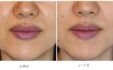
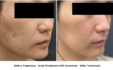
Both nasolabial folds were concerning, particularly the deeper right side. Growth factor treatment was performed on both sides, with the aim of improving the overall balance naturally.
Growth factor treatment aims to stimulate the skin’s collagen and elastin production for gradual, long-term improvement in nasolabial folds that have become more noticeable with age and lifestyle changes.
View the treatment details and follow-up for this caseCases With Less Noticeable Asymmetry

A case in which the right fold was particularly concerning and asymmetry became less noticeable following growth factor injections.
Before treatment, the right fold was deeper and the difference was noticeable from the front. After growth factor treatment, the right fold appeared softer, the difference between the sides became less pronounced, and the overall appearance looked more youthful.
View the treatment details and follow-up for this case
A male patient whose pronounced asymmetry was improved with a natural-looking result.
His right nasolabial fold was much more prominent. We also regularly see male patients and aim to provide an environment where men feel comfortable discussing these concerns.
View the treatment details and follow-up for this case
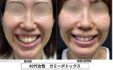
A case in which both folds became less noticeable, creating a more balanced appearance from the front.
The folds looked different on each side. By treating both folds, the aim was not only to reduce asymmetry but also to improve the impression of the face as a whole.
View the treatment details and follow-up for this case
A case showing improvement in a clearly defined, deep nasolabial fold in a male patient.
Even when a fold is deep and clearly visible at rest, growth factor treatment may make the asymmetry less noticeable if skin creasing and reduced firmness are major contributing factors.
View the treatment details and follow-up for this caseA Case in Which the More Noticeable Side Changed After Treatment

A case in which the originally deeper side improved substantially, making the opposite side relatively more noticeable.
Before treatment, the right fold (on the left side of the photograph) was deeper. After treatment, the right side improved substantially, so the fold on the other side appeared relatively more noticeable.
This case illustrates why the treatment goal should not be based solely on correcting whichever side is deeper. Growth factor treatment works through cellular responses, which may not be identical on both sides. Rather than promise perfect symmetry, our clinic focuses on achieving a natural-looking balance across the whole face.
View the treatment details and follow-up for this caseGrowth factor treatment can be a worthwhile option for patients who value gradual, natural-looking changes and potential longevity. However, hyaluronic acid filler may be more suitable when the main issue is a marked hollow or contour step beside the nose. When the main concern is sagging in the cheek or around the mouth rather than the fold itself, a thread lift or device-based treatment (HIFU or RF) may be better suited. Rather than choosing a treatment based on someone else’s before-and-after photos, we recommend first discussing which type of asymmetry you have during a consultation.
Read more about our growth factor treatment for nasolabial folds.
When to Choose Fillers, HIFU, Thread Lifts, or Botox
Hyaluronic Acid Fillers Allow More Immediate Adjustment
Fillers replace volume in a hollow or contour step, and the shape can be assessed during the appointment. They may therefore be suitable when a hollow beside the nose is deeper on one side or one cheek-to-fold boundary casts a stronger shadow.
However, “more filler on the deeper side” is not always the answer. Overfilling the fold itself can cause unnatural fullness or unevenness. Blood vessels run near the nasolabial area, and vascular occlusion may cause rare but serious complications, including skin injury and vision problems.[5]
For more information about filler safety, see hyaluronic acid fillers and the risk of blindness. For dissolving fillers, read about hyaluronidase. Our article on hyaluronic acid treatment for nasolabial folds describes the basics.
When One Cheek Sags More, Consider HIFU or a Thread Lift
If one cheek looks heavier, or you are concerned about sagging around the mouth and jawline as well as the fold, using injections alone to match the two sides may add excessive volume to the deeper side.
For mild to moderate sagging, we may consider HIFU or radiofrequency (RF) tightening. If physical lifting is required, a thread lift may be considered.
For details, see HIFU benefits and side effects and thread lifts for nasolabial folds.
Botox May Be Considered Cautiously for Smile-Related Asymmetry
If your face is relatively symmetrical at rest but one fold becomes much stronger when you smile, uneven movement of the muscles around the mouth may be involved. After careful assessment, Botox may help in some cases.
On the other hand, Botox is unlikely to adequately correct folds that remain visible at rest or structural hollows. Inappropriate injection placement or dosage can also make a smile look unnatural or create new asymmetry, so it is not a treatment we recommend to everyone.
Botox for nasolabial folds that appear when smiling、Botox contraindications、our Botox treatment guide may also be useful.
At-Home Care Is for Prevention and Support, Not a Replacement for Treatment
Moisturizing, sun protection, and minimizing friction are important. If foundation collects more in one fold, dryness or an established skin crease may be contributing. See why foundation collects in nasolabial folds.
Repeated vigorous massage may aggravate spots, dullness, or melasma through friction. Excessive facial exercises may also reinforce smile lines, lines that remain visible at rest, or expression-related asymmetry by repeatedly contracting particular muscles. At our clinic, we regard at-home care as preventive and supportive rather than a substitute for treatment. See self-care for nasolabial folds.
Summary: Aim for Natural Balance, Not Perfect Symmetry
The first question is not which treatment to choose, but what is causing the difference between the two nasolabial folds.
If one side is deeper because of a crease that remains at rest, growth factor treatment may be considered. Hyaluronic acid may be more appropriate for hollows and contour steps near the nose, HIFU or a thread lift for sagging cheeks, and carefully selected Botox treatment for asymmetry caused by smiling. Many patients have overlapping causes, so treatments may be combined as needed.
Some degree of asymmetry is natural and very common. The risk of rushing to erase one side is that overtreatment may actually make the face look less natural.
At our clinic, our goal is not to make both sides perfectly identical, but to create a natural-looking balance across the face. Some patients may benefit from treatment, while others may simply be seeing an exaggerated shadow in certain lighting or photographs and do not need to rush into treatment.
For a broader overview, read our complete guide to causes and treatments of nasolabial folds.
Frequently Asked Questions About Uneven Nasolabial Folds
Q. Can I correct uneven nasolabial folds with home care?
Moisturizing and sun protection may improve the appearance slightly when dryness, UV exposure, or puffiness is making the difference more noticeable. However, home care alone is unlikely to equalize the sides when skeletal factors, hollows beside the nose, cheek sagging, or established creases are involved.
Q. Will one deeper nasolabial fold get worse if I leave it untreated?
As skin firmness decreases and the cheeks descend with age, an existing difference may gradually become more noticeable. Whether to treat it now depends not only on how pronounced it is but also on how much it bothers you.
Q. Is it possible to treat only one side?
Yes. However, repeatedly treating just one side can sometimes reverse the apparent difference or lead to an unnatural result. We discuss how much correction you want, monitor progress, and aim for a result that feels balanced.
Q. Which treatment is best for uneven nasolabial folds?
That depends on the cause. As a general guide:
- Creases visible even at rest: Growth factor treatment
- Hollows or shadows beside the nose: Hyaluronic acid fillers
- Sagging or drooping cheeks: HIFU、 Thread lift
- Folds prominent mainly when smiling: Botox may be considered cautiously.
- Combination of causes (very common): We assess whether skin firmness, hollows, or sagging should be prioritized and combine only the treatments needed.
If you are comparing options, see our comparison of growth factors, hyaluronic acid, and Botox.
Q. Can treatment make both sides perfectly symmetrical?
Perfect symmetry cannot be guaranteed because the underlying facial bones, tissues, and muscle movements differ naturally between sides. Treatment aims for a natural-looking balance, for example making the deeper side less conspicuous without affecting the appearance of your smile.
Before Choosing Treatment, Find Out What Is Causing the Difference
A deeper fold on one side may involve a combination of skin creasing, hollows beside the nose, cheek sagging, and facial movement. During your consultation, we assess whether treatment is necessary and discuss the least extensive options that may create a natural-looking improvement. You do not need to decide on treatment on the day of consultation. Please feel free to discuss any concerns about uneven nasolabial folds.
- Find out which treatment may suit me
- Check whether treating only one side could look unnatural
- Understand whether I need treatment for sagging
- Find out whether monitoring without treatment is appropriate
* Results, recovery, and treatment requirements vary by individual. We will explain suitability and risks during your consultation.
References and Medical Evidence
- Linden OE, et al. The Relationship between Age and Facial Asymmetry. Plast Reconstr Surg. 2018. PMID: 30511968. PubMed
- Gierloff M, et al. The subcutaneous fat compartments in relation to aesthetically important facial folds and rhytides. J Plast Reconstr Aesthet Surg. 2012. PMID: 22658728. PubMed
- Rohrich RJ, et al. The youthful cheek and the deep medial fat compartment. Plast Reconstr Surg. 2008. PMID: 18520902. PubMed
- Rittié L, Fisher GJ. UV-light-induced signal cascades and skin aging. Ageing Res Rev. 2002. PMID: 12208239. PubMed
- Murray G, et al. Guideline for the Management of Hyaluronic Acid Filler-induced Vascular Occlusion. J Clin Aesthet Dermatol. 2021. PMID: 34188752. PubMed
- Kroumpouzos G, et al. Hyaluronidase for Dermal Filler Complications: Review of Applications and Dosage Recommendations. 2024. PMC
- Amiri M, et al. Microfocused Ultrasound With Visualization Effectiveness and Safety: A Systematic Review and Meta-Analysis. Aesthet Surg J. 2025. PMID: 39540440. PubMed
- Atiyeh BS, et al. Percutaneous Thread Lift Facial Rejuvenation: Literature Review and Evidence-Based Analysis. Aesthetic Plast Surg. 2021. PMID: 33471152. PubMed
- Pham CT, et al. Safety Profile of Thread Lifts on the Face and Neck: An Evidence-Based Systematic Review. 2021. PMID: 34699439. PubMed
- Li R, et al. Application of 3-Dimensional Technology for Evaluating the Effects of Botulinum Toxin A Injection for Treating Nasolabial Folds. 2023. PMID: 36536480. PubMed
- Centers for Disease Control and Prevention. Signs and Symptoms of Stroke. CDC
* This article is intended for general information only. Treatment eligibility, medications or devices, injection volume, number of sessions, cost, effectiveness, duration, and risks are assessed individually during consultation. Prices shown are standard rates as of August 2026. Individual case outcomes vary; similar results cannot be guaranteed.





 03-6434-7678