
 電話で予約
 WEB予約
 LINEで予約



What to Know When Smile Lines Start to Concern You—Whether You Are in Your 20s or Your 40s
There Is No Single Age When Nasolabial Folds Become Noticeable
“I’m only in my 20s, so why do my smile lines look deeper than those of people my age?” “Ever since I entered my 40s, I notice them whenever I look at photos or in the mirror.” You may wonder at what age nasolabial folds normally become noticeable.
Age is not the only factor that determines how visible nasolabial folds are. Your natural facial structure, hollows beside the nose, cheek volume, facial expressions, and skin firmness can all contribute. As a result, some people become concerned about their smile lines in their 20s, while others first notice them in their 50s or later.
This article explains common reasons that nasolabial folds become more noticeable at different ages, what you can do before they deepen, and what treatment options may be considered for deeper folds.
Why Nasolabial Folds Become Noticeable Can Change with Age
How noticeable your folds are depends on facial structure, the distribution of cheek fat, expressions, skin firmness, UV exposure, and other factors. The following are common age-related patterns, but the timing of these changes varies from person to person.
20s
Inherited facial structure, shadows from cheek volume, and expression habits
A hollow beside the nose, shadowing from fuller cheeks, and repeated facial expressions when smiling can make the folds stand out.
30s
Early loss of skin firmness and mild sagging add to existing shadows
Shadows already present in your 20s may become more pronounced as skin loses firmness and the cheeks begin to sag slightly. Lines may also linger after your expression relaxes.
40s
Skin creases combined with sagging cheeks
Wrinkles that remain at rest may become more visible alongside shadows created by cheek tissue settling over the folds.
50s and beyond
Changes in the skin and cheeks are joined by age-related changes to facial bone structure
Bones around the nose and upper jaw gradually undergo age-related remodeling. This can make hollows beside the nose more apparent and accentuate shadows along nasolabial folds.
In Your 20s: Facial Structure and Cheek Volume May Create Shadows

Noticeable smile lines in your 20s are not necessarily unusual. In younger people, factors other than skin aging or pronounced sagging—particularly inherited facial structure, hollows beside the nose, fuller cheeks, and habitual expressions when smiling—often play a significant role.
The upper part of the fold, close to the nose (around the base of the nostril), may look deeply recessed. Meanwhile, the lower part near the mouth may show few or no permanently etched skin creases.
A crease etched into the skin calls for a different approach from a fold that appears deep because of hollows beside the nose or shadows from cheek tissue.
Another Point to Check in Your 20s
Is Cheek Volume Creating an Overhang and Shadow Along the Fold?
With fuller cheeks, tissue can sit over the nasolabial fold. The resulting step between the cheek and the fold creates a shadow that makes the line appear deeper.
For some young people, this shadow is the main reason smile lines look prominent. Particular patterns of muscle movement when smiling can make them appear even deeper.
During an examination, we also check whether the folds become somewhat shallower when you lie on your back or remain largely unchanged. This helps us assess the contribution of cheek tissue and gravity. We also compare wrinkles and shadows with the face at rest and while smiling.

In Your 30s: Skin Firmness and Mild Sagging Add to Existing Shadows
In your 30s, gradual changes in skin firmness may begin to influence the appearance of smile lines alongside your natural facial structure and cheek volume. Shadows you already had in your 20s may be accentuated by changes in the skin and mild cheek sagging, making them more noticeable than before.
As skin loses elasticity, creases that form when you smile may begin to remain visible after your face relaxes.
You may notice that lines remain after smiling, foundation gathers in the creases, or shadows look stronger in dim lighting.
In Your 40s: Skin Wrinkles and Sagging Cheeks Often Occur Together
When we ask patients when they first noticed their nasolabial folds, some say “recently” or “after I turned 30,” while others say the change happened so gradually that they cannot recall exactly when it began.
The dermis contains collagen and elastin, which help maintain skin firmness and elasticity. Aging, UV exposure, smoking, and other lifestyle factors can reduce or alter these components. As a result, creases formed during smiling may take longer to disappear and may remain visible even when the face is relaxed.
If cheek tissue also begins to settle over the folds, shadows appear along the same areas, making both the skin creases and the shadows more noticeable.
Around this time, some patients also become more aware of differences between the two sides or find that their folds suddenly look deeper under dim lighting.


Self-Care to Revisit in Your 40s
Sun Protection, Moisturizing, and Not Smoking Remain Important in Your 40s and Beyond
UV exposure and smoking accelerate skin aging, contributing to reduced firmness and more visible wrinkles. When skin creases are added to pre-existing shadows caused by cheek volume or hollows beside the nose, some people feel their folds have suddenly deepened in their 40s.
Dryness, an unbalanced diet, and ongoing lack of sleep can also affect skin condition. Stress can disrupt eating and sleeping patterns, so it is helpful to review your overall lifestyle in realistic, manageable ways.
You do not need to dwell on past habits. Consistent sun protection, moisturizing, avoiding smoking, and getting enough sleep can still be worthwhile starting now.
In Your 50s and Beyond: Changes in Skin, Cheek Volume, and Facial Bone Structure Overlap
From the 50s onward, reduced skin firmness and elasticity, changes in cheek volume or position, and age-related remodeling of the bones around the nose and upper jaw can all contribute to more visible folds.
Bones around the nose and upper jaw gradually change with age. I often explain to patients that even facial bones change as we get older. Changes in the bony support beside the nose can make hollows in that area more prominent. When this occurs alongside loss or descent of cheek fat, nasolabial folds may appear deeper.
Some patients have a combination of persistent skin creases, hollows beside the nose, and shadows from cheek tissue. During the examination, we look at the face at rest and while smiling, and from both frontal and angled views, to decide which changes could be addressed for a natural-looking result.
It Is Not Too Late to Consider Treatment for Deep Nasolabial Folds

Treatment can still be considered after the folds have become deep. We examine persistent skin creases, hollows beside the nose, and shadows from the cheeks, then choose an approach based on the area you most want to improve.
If deeply etched creases are present, we assess the wrinkles in the skin as well as any hollows beside the nose. Continue sun protection, moisturizing, and avoiding smoking as part of self-care; medical treatment should be based on the wrinkles, hollows, and shadows involved rather than age alone.
We also receive consultations from people in their 20s. We do not automatically conclude that they are too young to consider treatment. Some seek advice or treatment because they are concerned about future changes. However, treatment cannot completely prevent nasolabial folds from developing in the future. We focus on addressing existing hollows or wrinkles while encouraging ongoing sun protection and moisturizing.
When Considering Treatment at Our Clinic
We Focus on Whether Wrinkles or Hollows Need Treatment, Rather Than Age
For noticeable hollows beside the nose or deep depressions along the folds
Hyaluronic Acid Fillers
Hyaluronic acid fillers are injected into depressions beside the nose or along nasolabial folds to smooth changes in contour. Improvement in the hollow can generally be seen soon after treatment.
We determine injection sites, depth, and volume based on the severity and asymmetry of the folds.
Learn More About Hyaluronic Acid Treatment for Nasolabial Folds
For persistent skin creases or reduced firmness
Growth Factor Injections
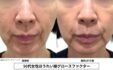
This treatment involves injections into the nasolabial fold area intended to stimulate collagen and elastin production, improve skin firmness and thickness, and make wrinkles less noticeable.
If a prominent hollow beside the nose is related to facial structure, hyaluronic acid fillers may be more suitable than growth factor treatment alone.
Learn More About Growth Factor Treatment for Nasolabial Folds
There is no fixed order for growth factor and hyaluronic acid treatment. We consider which issue is more prominent—persistent skin creases or hollows beside the nose—and when you would like to see a change before selecting a treatment approach.
Frequently Asked Questions About Age and Nasolabial Folds
At What Age Do Nasolabial Folds Become Noticeable?
The age at which they begin to concern people varies. Even in your 20s, inherited facial structure, hollows beside the nose, fuller cheeks, and facial expression habits may make smile lines noticeable. From the 30s onward, gradual loss of skin firmness and some cheek sagging can make them more apparent.
Is It Unusual to Have Noticeable Nasolabial Folds in Your 20s?
Not necessarily. In your 20s, natural facial structure, hollows beside the nose, shadows created by cheek tissue over the folds, and expression habits may play a larger role than age-related sagging.
Is It Too Late for Treatment Once Nasolabial Folds Are Deep?
Treatment can still be considered. If creases remain even when your face is relaxed, we assess both those skin wrinkles and any hollows beside the nose before deciding on an approach. It is also helpful to maintain moisturizing and sun protection from an early stage.
Should I Choose Hyaluronic Acid or Growth Factor Treatment?
Hyaluronic acid fillers may be considered for hollows beside the nose or deep depressions along the folds, while growth factor injections may be considered for persistent skin creases and reduced firmness. If both are present, we decide at consultation which issue to address first.
Summary | Focus on What You Notice, Not Just Your Age
Some people find their nasolabial folds increasingly noticeable even after investing in expensive creams, serums, and massage. Because facial structure, hollows beside the nose, cheek volume, and facial expressions also play a role, some aspects cannot be substantially changed through self-care alone.
In an era when people may live to 100, age need not determine whether you pursue a younger-looking appearance. Whether you are in your 20s or your 80s, the important thing is to understand your present condition and decide what you want to achieve. I believe the desire to look younger has no age limit.
Not Sure What Age Is Appropriate to Consider Treatment?
During your visit, we examine the folds when your face is relaxed and when you smile, whether lines remain afterward, any hollows beside the nose, and whether cheek tissue sits over the folds.
You do not need to choose a treatment before making an appointment. We explain what self-care can and cannot do, what treatment may improve, its limitations, downtime, risks, and costs.
We do not recommend unnecessary treatments or pressure patients into additional purchases. We take time to explain the procedures and important considerations so you can make an informed decision.









 03-6434-7678
 オンライン相談
 来院予約