
 電話で予約
 WEB予約
 LINEで予約


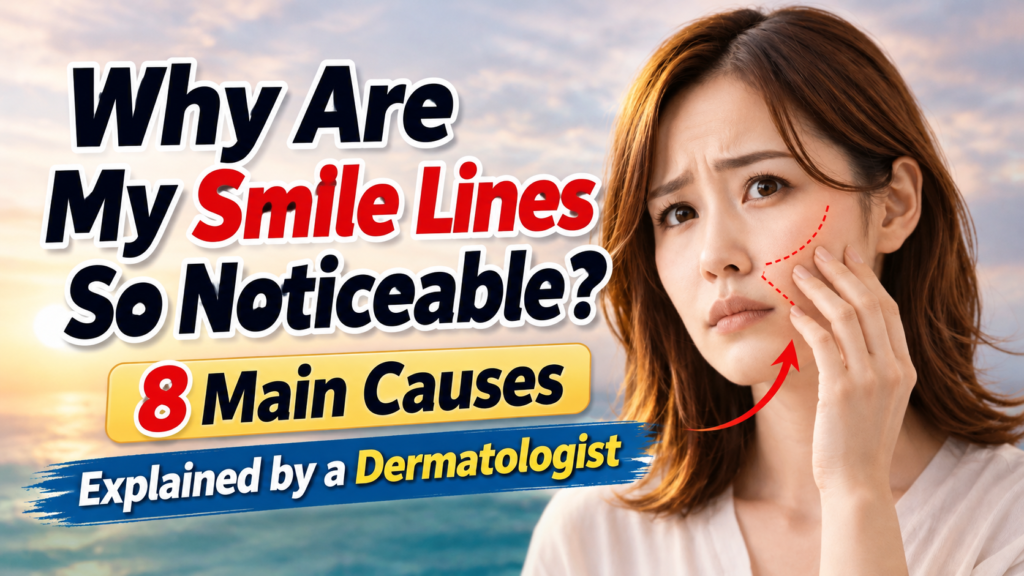
Understanding why smile lines become more noticeable
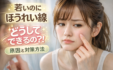
“Why are my nasolabial folds more noticeable than those of other people my age?”
Nasolabial folds are not determined by age alone. Several factors, including skin, facial muscles, cheek fat, and bone structure, interact to create visible creases, shadows, or hollows beside the nose. Understanding these different causes can help you decide what to address through home care and what may require medical treatment.
Do any of these concerns sound familiar?
Find information based on what you notice
For treatment options when your folds become more prominent as you smile, see our guide to Botox for nasolabial folds.
Some people first notice their nasolabial folds when they remove their face mask in public, or when looking at photos or in a mirror.
Although these folds often become more prominent with age, people in their 20s or 30s may also notice them because of facial structure, expressions, or the distribution of facial fat. Since there is rarely just one cause, there is no single treatment that suits everyone.
This guide explains eight factors that can make nasolabial folds more noticeable and how to identify suitable approaches. For a broader overview, see our complete guide to nasolabial fold causes and treatments.
3 Things You Can Start Doing Today
Protect your skin from the sun every day
Use sunscreen and protective accessories such as hats regularly, not only on very sunny days, to reduce UV-related skin damage.
Moisturize skin that is prone to dryness
Do not rely on toner alone. Use a lotion or moisturizer suited to your skin to help reduce moisture loss.
Review rapid weight loss and unproven facial exercises
Avoid sudden weight changes and facial exercises that forcefully strain the muscles around your mouth. Stop if you experience discomfort or notice worsening.
Self-care mainly helps prevent worsening associated with dryness and UV exposure. Deep creases visible at rest, hollows beside the nose, and shadows caused by cheek volume may not respond sufficiently to home care alone.
Nasolabial Folds Often Have Multiple Contributing Causes
The appearance of nasolabial folds is influenced by skin, muscles, fat, bone structure, and supporting ligaments. Identifying these factors helps you focus on the most appropriate home care and treatment options.
Visible skin creases
Reduced skin firmness, dryness, hollows around the nose and folds, and repeated movements while smiling or speaking may all contribute.
Pronounced shadows or contour changes
Cheek fat, skin laxity, and hollows beside the nose can make shadows appear deeper.
More noticeable when smiling
The movement and strength of facial muscles may play a major role.
Differences between the two sides
Bone structure, chewing habits, and habitual facial expressions may contribute.
For further details, read about the types of nasolabial folds and our overview of what causes nasolabial folds.
8 Causes of Noticeable Nasolabial Folds
Cause 1Skin Aging and Loss of Firmness
UV exposure, dryness, and age-related skin changes can reduce firmness, making expression lines more likely to remain visible even when the face is relaxed.

Beneath the surface of the skin is a layer called the dermis. It contains collagen, elastin, and hyaluronic acid, which help support the skin.
Patients sometimes ask, “What is the difference between collagen and hyaluronic acid?” In simple terms, collagen forms a network of supportive fibers, while hyaluronic acid is a gel-like substance that retains water.
Over time, UV exposure, dryness, smoking, stress, and glycation-related changes can contribute to reduced skin firmness and elasticity. As the skin provides less support to the cheeks, sagging can add further shadows.
Useful everyday habits include moisturizing, sun protection, a balanced diet, sufficient sleep, and avoiding smoking. If your skin is dry or feels dehydrated, moisturizing is especially important.
For a broader guide to at-home care, see preventing nasolabial folds and caring for them at home.
Cause 2Repeated Movement of the Muscles Around the Mouth
Repeated movements when eating, talking, and smiling, combined with reduced skin elasticity, can make folds persist.

The muscles around your mouth repeatedly contract and relax as you eat and speak. Expression lines can develop in areas that move frequently. As the skin loses elasticity, some lines may remain even after the facial muscles relax.
Think of a piece of paper folded in the same place again and again. Eventually, a crease can remain even after it is opened. Facial skin is not paper, but repeated movements and changes in skin elasticity can similarly contribute to persistent creases.
Try smiling gently in front of a mirror, then relax your face and see whether the lines remain. This can help you observe their appearance, but it does not establish the cause or whether treatment is necessary.
Be cautious with facial exercises that put excessive strain on your nasolabial folds. If you feel discomfort or notice worsening, stop and reassess.
Cause 3Facial Muscle and Fat Volume
When cheek tissue forms a step over the nasolabial fold, its shadow may become more pronounced than the crease itself.

The amount and distribution of cheek muscle and fat affect how visible nasolabial folds appear. Fuller cheeks can create a contour difference around the fold, making the shadow seem deeper.
Muscles
People with strong facial muscles or a habit of moving their mouth forcefully may place greater strain on the fold when smiling. However, muscle activity should be evaluated together with skin condition and bone structure.
Fat
Fuller cheeks can create contour changes that deepen the shadow along the fold. Conversely, people with less cheek fat may still have noticeable shadows or sagging because of reduced skin firmness or underlying skeletal hollows.
Fat compartments associated with facial contours include the malar fat pad, buccal fat, and jowl fat.
Cause 4Bone Structure and Age-Related Facial Bone Changes
The shape of the bones supporting the area beside the nose, along with age-related facial bone remodeling, can affect hollows and contour differences in the upper nasolabial fold.

Natural Bone Structure
Inherited facial anatomy also affects the appearance of smile lines. For example, prominent cheekbones may create a greater contour difference that casts a visible shadow.
When the supporting area beside the nostril is naturally recessed, the upper part of the nasolabial fold may look deeper. Jaw size, tooth alignment, and other aspects of the facial skeleton can also contribute.
Age-Related Facial Bone Remodeling
The size and shape of facial bones change with age. Changes in the maxilla, which supports the area beside the nose, may make hollows near the base of the nose and upper nasolabial fold more apparent.
Bone structure is only one factor: the overlying ligaments, fat, muscles, and skin also contribute. We therefore do not recommend treatment based on bone structure alone.
Cause 5Gravity and Facial Sagging
When skin and cheek support weakens, gravity-related downward movement can accentuate contour changes and shadows.

Gravity is unavoidable. As collagen and elastin decrease and cheek support weakens, cheek tissues may descend and overlap the outer edge of the nasolabial fold.
When you look at yourself in a mirror or phone camera while lying down, your smile lines may appear less prominent than when you are standing. This happens because gravity acts differently on the cheeks, changing the contours and shadows around the folds.
However, folds appearing softer when lying down does not prove that sagging is the only cause. Existing skin creases and hollows beside the nose also need to be considered.
Cause 6Rapid Weight Loss
A quick reduction in cheek fat can make hollows or sagging more noticeable, depending on your skin firmness and underlying facial structure.

Rapid weight loss may make nasolabial folds stand out. When cheek fat decreases over a short period, the skin may temporarily appear looser or more wrinkled as the facial contour changes.
This may be especially noticeable in people who already have reduced skin elasticity. On the other hand, reducing cheek fat may soften shadows in people with fuller cheeks. Results vary from person to person.
Cause 7Changes After Fat-Dissolving Injections or Liposuction
After reducing cheek fat, the balance between the amount removed and the skin’s firmness can sometimes make sagging or wrinkles more noticeable.

Some patients notice more pronounced nasolabial folds or wrinkles after fat-dissolving injections or facial liposuction. Reduced fat may reveal pre-existing skin laxity or sagging. This is a particular consideration in patients over 40, when age-related laxity may be more common.
However, the outcome depends not only on age but also on the treated area, the amount of fat removed, the original facial volume, skin condition, and bone structure. Before pursuing cheek-fat reduction, consider the potential for future hollowness or sagging as well as facial slimming.
Cause 8Changes Around the Mouth After Dental or Oral Surgery
If your facial appearance changes after orthodontics, tooth extraction, or jaw surgery, consider not only the procedure but also facial anatomy, weight changes, expressions, and aging.

Some patients start noticing their nasolabial folds after dental procedures, particularly orthodontic treatment, extractions, or jaw surgery.
Surgery that changes bone structure may significantly alter facial contours. In contrast, orthodontics or tooth extraction alone does not necessarily cause major changes in facial bones. Weight changes during treatment, mouth habits, chewing patterns, expressions, and aging may also play a role.
Lighting Can Make Nasolabial Folds Look Deeper
Have you ever seen your reflection in a train window or a dim bathroom mirror and thought, “My smile lines suddenly look much deeper”?
Even in the same person, the direction and intensity of light can change the shadows cast by cheek contours and nasolabial folds. This does not necessarily mean the skin crease itself has suddenly deepened.

Distinguishing shadows caused by lighting from actual skin creases can help identify suitable approaches.
How Causes of Nasolabial Folds Vary with Age
Smile lines can be prominent even in your 20s or 30s because of bone structure, facial movement, or fat distribution. From the 40s onward, skin laxity and sagging may become more important contributing factors.
Treatment decisions should be based on the current appearance and underlying causes, not on age alone.
Choose Treatments Based on the Cause and Your Goals
Over-the-counter facial devices may be part of self-care, but their visible effects may be limited when several factors contribute to nasolabial folds.
HIFU uses focused ultrasound energy to heat tissues and aims to improve skin tightening. It does not directly fill deep creases visible at rest or hollows beside the nose. Thread lifts and surgical facelifts can lift sagging tissues, but skin creases or skeletal hollows may remain.
Injectable treatments can be options for addressing certain skin creases or depressions more directly. At our clinic, we mainly consider growth factor injections and hyaluronic acid fillers based on each patient’s anatomy and preferences.
For a comparison of the available approaches, see how to choose a nasolabial fold treatment.
Hyaluronic Acid Fillers
Growth Factor Injections
There is no fixed order in which treatments must be performed. When skin creases and hollows coexist, treatments may be combined or performed in stages. Decisions about which treatment to try first depend on the type of fold, desired results, timing, downtime, costs, and risks.
For a more detailed comparison, see hyaluronic acid vs. growth factor injections、 and our comparison of injection options for nasolabial folds
. To learn more about recovery, see our comparison of downtime for smile line treatments; for the complete range of home-care and medical options, see nasolabial fold prevention, self-care, and treatments; and for choosing suitable options, see effective approaches to nasolabial folds.
Downtime, Lumps, and Other Risks to Know Before Treatment
Injectable treatments do not involve surgical incisions, but they are not risk-free. Questions such as “Will I have swelling or bruising?”, “Will it hurt?”, and “How much downtime should I expect?” should be discussed before treatment.
At our clinic, we use appropriate anesthesia and take care to minimize discomfort with either injection treatment.
Main Risks of Hyaluronic Acid Fillers
Possible effects include swelling, bruising, pain, asymmetry, lumps, irregularities, infection, and allergic reactions. Very rarely, vascular occlusion can cause skin necrosis, visual impairment or blindness, or stroke. These serious events have not occurred at our clinic to date.
Main Risks of Growth Factor Injections
Possible effects include swelling, bruising, pain, discomfort, and asymmetry. Rare complications may include infection, allergic reactions, unevenness, lumps, or excessive tissue growth. These rare complications have not occurred at our clinic to date.
Treatment Details, Costs, and Expected Timeline
Growth Factor Treatment for Nasolabial Folds
Hyaluronic Acid Fillers for Nasolabial Folds
* Fees and treatment details may change. Before treatment, confirm suitability, product selection, number of sessions or quantity required, total cost, downtime, and potential risks.
Summary: Understanding the 8 Causes of Nasolabial Folds

Nasolabial folds may become more visible because of multiple interacting factors, including skin, facial muscles, muscle and fat volume, bone structure, gravity, dieting, fat-reduction procedures, and changes following dental or oral surgery.
Moisturizing, sun protection, avoiding abrupt weight loss, and reviewing excessive facial exercises are steps you can take now. However, skeletal hollows beside the nose, cheek fat distribution, and established skin creases may not respond sufficiently to self-care alone.
At Houreisen Skin Clinic, we consider growth factor injections and hyaluronic acid fillers according to the causes and your desired outcome. Learn more in our complete guide to hyaluronic acid fillers for nasolabial folds.
You Can Discuss the Causes Before Choosing a Treatment
You are welcome to book a consultation even if you are unsure which treatment might suit you.
We explain suitable options, expected benefits and limitations, downtime, risks, and costs. You may take time to consider the information before deciding. We do not pressure patients into unnecessary procedures.
Online inquiries are free. The first in-person consultation is also free of charge.
Frequently Asked Questions (FAQ)
Can nasolabial folds be treated with home care alone?
Moisturizing, sun protection, and healthy habits can help limit worsening associated with dryness and UV exposure. However, persistent creases, hollows beside the nose, and contour differences caused by cheek tissue may not respond adequately to self-care alone.
Which is better for me: hyaluronic acid or growth factor injections?
Hyaluronic acid may be an option when you want to improve hollows or contour differences beside the nose or around nasolabial folds relatively quickly. Growth factor injections may be considered for established skin creases or reduced firmness when gradual improvement is preferred. If several factors are involved, the clinician will assess whether one approach or a combination is more suitable.
Can injections help nasolabial folds that are visible only when smiling?
Botox may be considered when muscle movement during smiling or speaking is the main concern. It generally does not address folds visible at rest, and it can affect smiling or mouth movement. Suitability and injection planning therefore require careful individual assessment.
Can I have a consultation without deciding on a treatment?
Yes. You do not need to choose a treatment before booking. We review your concerns and goals, explain possible causes, treatments, benefits, precautions, and costs. You can decide later rather than proceeding on the day of consultation.





 03-6434-7678
 オンライン相談
 来院予約